
Dawn Biddison
Community Outreach and Engagement Specialist
Arctic Studies Center, National Museum of Natural History, Smithsonian Institution
Science, Social Studies, World Languages, Arts, Other
: Anthropology, Museum Studies
 Smithsonian Staff
Dawn Biddison is the Community Outreach and Engagement Specialist at the Alaska office of the Smithsonian Arctic Studies Center. She works in collaboration with Alaska Native Elders, Knowledge-Holders, artists, educators, learners and cultural organization staff on Indigenous heritage projects. Her work began with museum research, exhibition and website work, and continues through equitable work with Alaska Natives on outreach, museum collections access and research, artist residencies, community fieldwork and workshops, public programs, documentation and educational resources that respect Indigenous protocols and goals, support intergenerational learning and teaching, and facilitate accessibility. She received a 2022 Smithsonian Institution Secretary’s Research prize and the 2021 "Award for Excellence in the Museum Field" from Museums Alaska. Examples of her work are available online at the Smithsonian Learning Lab website "Smithsonian Arctic Studies Center in Alaska" https://learninglab.si.edu/org/sasc-ak. Contact her at biddisond@si.edu.
Dawn Biddison's collections
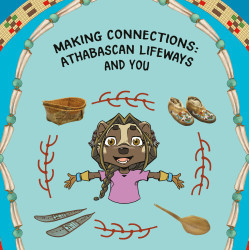
Activities / Making Connections: Athabascan Lifeways and You
<p>Welcome! We would like to introduce you to Athabascan peoples of Alaska, who also call themselves Dene. Through the activities guide <em>Making Connections: Athabascan Lifeways and You</em> featured on this site and the additional resources in this collection, we’ll visit with Dene people from Alaska, look closely at their cultural belongings cared for by the Smithsonian Institution, learn about their ways of life, and make connections through activities you can do wherever you live.</p>
<p>We would like to recognize the all the Athabascan Elders, Language Warriors, Knowledge Keepers, and Artists who have contributed to these activities. We acknowledge the work it takes for us to remember, reclaim, and grow each of our cultures.</p>
<p>Project Credits: <em>Making Connections: Athabascan Lifeways and You</em> is a collaboration between artist, curator, and Knowledge-Keeper Melissa Shaginoff (Ahtna) and Museum Specialist Dawn Biddison, Arctic Studies Center, Alaska office. Layouts, graphic design and illustrations were created by Dimi Macheras (Ahtna) and Casey Silver of 80% Studios, Inc. All content was reviewed by Knowledge-Keeper, language expert and teacher Kari Shaginoff (Ahtna). </p>
<p>The content provided in this guide was drawn from knowledge shared by Athabascan collaborators on and research contributors to the Smithsonian exhibition <em>Living Our Cultures, Sharing Our Heritage: The First Peoples of Alaska</em>, located at the Anchorage Museum. Content was also drawn from the collaborative project “Coming Home: Reclaiming Ahtna Knowledge through Museum Collections.” Additional content was provided by the Ahtna collaborators noted above. </p>
<p>The creation and printing of this guide was made possible through generous support from the Smithsonian Institution’s Office of the Under Secretary for Education, with additional support from the Smithsonian Regional Councils, FedEx, and the Alaska office of the Arctic Studies Center, National Museum of Natural History.</p>
<p>NOTE: The knowledge that Alaska Natives (Indigenous peoples of Alaska) have shared on this site is their cultural heritage, and they have cultural property rights for this knowledge. Please utilize what you learn from Alaska Natives with respect to their rights, which includes not using what you learn for personal gain such as selling artwork derived from this knowledge. To learn more about how to appreciate Alaska Native cultures respectfully, please go to the collection <a href="https://learninglab.si.edu/q/ll-c/Ha7AjCcnSBrgNbJt#r/44789">https://learninglab.si.edu/q/ll-c/Ha7AjCcnSBrgNbJt#r/44789</a> on this site where you will find a video and additional resources to learn more.</p>
<p>Contributor: <a href="https://learninglab.si.edu/profile/78098">Dawn Biddison</a></p>
Dawn Biddison
59
Curriculum / Learning with Plants: Connecting with Knowledge and Science in Your Community
<p>The Learning with Plants Connecting with Knowledge and Science in Your Community curriculum provides all students with resources to learn about science through both Western science and Traditional Knowledge. The lessons also cover ways in which our climate is changing and how tools from these fields can be used to protect what is being affected by these changes, including plants and wildlife. The curriculum seeks to empower students to see themselves as scientists who use the same skills as those used by people working in laboratories, museums and universities, and to see that they have the abilities to share information and educate people about what is affecting the natural resources that we all depend upon. </p>
<p>Note: The curriculum was completed in 2025. Due to staffing limitations, it is not possible to update it in the future, so you may need to find new sources for the few website links noted.</p>
<p>Written by: Sierra Young, Anchorage Museum (2024). Edited by & site created by: Dawn Biddison, Arctic Studies Center (Alaska office), National Museum of Natural History, Smithsonian Institution (2025)</p>
<p><u>Use/Distribution:</u> For non-profit, educational purposes only and in respect of Alaska Native tangible and intangible cultural and intellectual property rights. For more information about these rights, please go the “Cultural and Intellectual Property Rights” section of the Alaska Native Knowledge Network website at http://ankn.uaf.edu/IKS/rights.html.</p>
Dawn Biddison
15

Curriculum / Woven Connections: Exploring Science, Sustainability, and Culture Through Grasses [SITE IN PROGRESS]
<p>The curriculum “Woven Connections: Exploring Science, Sustainability, and Culture Through Grasses” shares science, art, and cultural values of grasses and weaving in Alaska. Through a series of 10 interconnected lessons, it bridges Indigenous ecological knowledge and scientific inquiry, fostering a deeper understanding of cultural practices and their connection to the natural world. The lessons were written for grades 9-12 but are intended to be flexible, allowing educators to tailor learning experiences to different age groups to ensure accessibility and engagement across grade levels. By combining hands-on activities with cultural learning, Woven Connections equips students with knowledge, skills, and respect for the heritage of Alaska Native communities and by extension all communities.</p>
<p>Notes: This entry is part of a larger collection at <a href="https://learninglab.si.edu/q/ll-c/rDzoR3eWiFxMmUPB">https://learninglab.si.edu/q/l...</a> The curriculum was completed in 2026. Due to staffing limitations, it is not possible to update it in the future, so you may need to find new sources for the few website links noted.<br></p>
<p><u>Credits:</u> Written by: Miles King, Anchorage School District classroom teacher & Bristol Bay Foundation Experiential Learning Coordinator (2025). Written and edited by: Dawn Biddison, Arctic Studies Center - Alaska office, National Museum of Natural History, Smithsonian Institution (2025). Edited by: Laura Zimin (Alutiiq/Sugpiaq), Alaska Consulting & Education Support; Ashley Thompson, Office of Education and Outreach, National Museum of Natural History; Written and edited by: Sierra Young, Programs Specialist, Anchorage Museum (2026).</p>
<p><u>Use/Distribution:</u> For non-profit, educational purposes only and in respect of Alaska Native tangible and intangible cultural and intellectual property rights. For more information about these rights, please go the “Cultural and Intellectual Property Rights” section of the Alaska Native Knowledge Network website at http://ankn.uaf.edu/IKS/rights.html.</p>
<p>This project was supported with internal Smithsonian Institution funds from the Youth Access Grants for A Community Based Approach to Culturally Responsive-Sustaining Education.<br></p>
<p>Source: <a href="https://learninglab.si.edu/org/sasc-ak">Smithsonian Arctic Studies Center in Alaska</a></p>
<p>Contributor: <a href="https://learninglab.si.edu/profile/78098">Dawn Biddison</a></p>
Dawn Biddison
18

St. Lawrence Island Yupik Language and Culture Lessons
<p>The Alaska Office of the Smithsonian’s Arctic Studies Center hosted a St. Lawrence Island Yupik language and culture seminar in January 2012, bringing together seven fluent speakers: John Apassingok, Lydia Apatiki, Ralph Apatiki, Sr., Elaine Kingeekuk, Christopher Koonooka, Merlin Koonooka and Angela Larson. They met for five days to discuss Yupik cultural belongings (often called objects by museums) in the Smithsonian exhibition <em>Living Our Cultures, Sharing Our Heritage: The First Peoples of Alaska </em>at the Anchorage Museum. </p>
<p>During the seminar, the St. Lawrence Island Yupik language was documented and language and culture teaching materials were written for use in schools and homes throughout Alaska and beyond. Twelve objects from the Smithsonian collections – with detailed entries below – are featured in the guide and lessons presented here. These resources pair with twelve video lessons that offer teachers, students, parents and lifelong learners access to the St. Lawrence Island Yupik language and lifeways.<strong><br></strong></p>
<p>Contributor: <a href="https://learninglab.si.edu/profile/78098">Dawn Biddison</a></p>
<hr>
<p><strong>Tags: </strong>Alaska, Native art, museum, education, language, Indigenous, St. Lawrence Island, Yupik, Smithsonian Arctic Studies Center in Alaska, distance learning, culturally responsive, culturally-responsive (#arcticstudies)</p>
Dawn Biddison
27
Iñupiaq Language and Culture Lessons
<p>The Alaska Office of the Smithsonian’s Arctic Studies Center hosted an Iñupiaq language and culture seminar in January 2011, bringing together eight fluent speakers: Sylvester Ayek, Bernadette Alvanna-Stimpfle, Alvira Downey, Herbert Foster Sr., Willie Goodwin Jr., Jana Harcharek, Faye Ongtowasruk and Rachel Riley. They met for four days to discuss Iñupiaq cultural belongings (usually called objects by museums) in the Smithsonian exhibition Living Our Cultures, Sharing Our Heritage: The First Peoples of Alaska at the Anchorage Museum. </p>
<p>During the seminar, the Iñupiaq language was documented, including three different dialects, and language and culture teaching materials were written for use in schools and homes throughout Alaska and beyond. Six objects from the Smithsonian collections – with detailed entries below – are featured in the guide and lessons presented here. These resources pair with <a href="https://learninglab.si.edu/collections/iupiaq-language-and-culture-videos/6DMoTfdLBJBWmfDT" target="_blank">six video lessons</a> that offer teachers, students, parents and lifelong learners access to Iñupiaq language and lifeways.
<strong><br></strong></p>
<p>Contributor: <a href="https://learninglab.si.edu/profile/78098">Dawn Biddison</a></p>
<hr>
<p><strong>Tags: </strong>Alaska, Native art, museum, education, language, Indigenous, Iñupiaq, Inupiaq, Smithsonian Arctic Studies Center in Alaska, distance learning, culturally responsive, culturally-responsive (#arcticstudies)<br></p>
Dawn Biddison
15
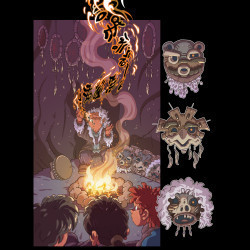
Indigenous Comic Art: Intergenerational Creativity and Learning with Chickaloonies
<p>The Chickaloonies project provides engaging and creative educational resources to help empower Indigenous youth in Alaska and beyond. Our work focuses on the comic art form as a creative way to learn about, express and perpetuate Indigenous heritage and Indigenous ways of learning: honoring Elders and knowledge-keepers and seeking to learn from them; experiencing the impact of storytelling and traditional values; learning multi-faceted information from heritage pieces in museum collections; and creating contemporary arts inspired by historic arts. Resources include an edited webinar video about the artists and project, an instructional comic art workbook and video introduction, a classroom poster, and photos with information – including knowledge shared by Elders – about Athabascan heritage in the Smithsonian collections. <br></p>
<p><strong>Project team: Artist </strong>Dimi Macheras (Ahtna Athabascan), 80% Studios; artist Casey Silver (non-Native), 80% Studios; cultural heritage collaborator Melissa Shaginoff (Ahtna Athabascan, Paiute); and project manager Dawn Biddison (non-Native), Smithsonian Arctic Studies Center, Alaska office</p>
<p>To contact the project manager, please send an email to Dawn at biddisond@si.edu. Contact 80% Studios at 80percentstudios@gmail.com and visit their website at <a href="https://protect-us.mimecast.com/s/KesTCVOyNlT42N0iGt4bL">www.eightypercentstudios.com</a>. </p>
<p>This project was made possible through generous support by The CIRI Foundation's Education Heritage Grant program, the Recovering Voices program of Department of Anthropology at the National Museum of Natural History, the Alaska State Council on the Arts, and supporters of the Arctic Studies Center in Alaska. (#arcticstudies)</p>
<p>NOTE: The knowledge that Alaska Natives (Indigenous peoples of Alaska) have shared on this site is their cultural heritage, and they have cultural property rights for this knowledge. Please utilize what you learn from Alaska Natives with respect to their rights, which includes not using what you learn for personal gain such as selling artwork derived from this knowledge. To learn more about how to appreciate Alaska Native cultures respectfully, please go to the collection <a href="https://learninglab.si.edu/q/ll-c/Ha7AjCcnSBrgNbJt#r/44789">https://learninglab.si.edu/q/ll-c/Ha7AjCcnSBrgNbJt#r/44789</a><br>on this site where you will find a video and additional resources to learn more.</p>
<p>Contributor: <a href="https://learninglab.si.edu/profile/78098">Dawn Biddison</a></p>
Dawn Biddison
27
Batuk’enelyashi: Natural Dyes from Dena’ina Lands
<p></p>
<p>In 2022, the Alaska Native Heritage Center collaborated with the Alaska office of the Smithsonian Arctic Studies Center on a project to perpetuate and strengthen Alaska Native knowledges of natural dyes stewarded for generations. The <em>Batuk’enelyashi: Natural Dyes from Dena’ina Lands </em>project – led by Alaska Native master artist June (Simeonoff) Parude, assisted by her granddaughter and apprentice Destinee VonScheele – included research, harvesting, experimentation, documentation and a weeklong educational workshop attended by an intergenerational group of Alaska Native artists and students. All work took place on the lands of the Dena’ina Athabascan people. The project was inspired by the foundational work on documenting natural dyes by Elder Rita Pitka Blumenstein in the 1984 book <em>Earth Dyes, Nuunam Qaralirkai: Dyes for Grass Made from Natural Materials</em>, published by the Institute of Alaska Native Arts.</p>
<p>During the <em>Batuk’enelyashi</em> project, different materials were sustainably harvested and experimented with for making and using as dyes: birch, willow and cottonwood tree bark; cottonwood and alder tree leaves, cottonwood tree catkins, low-bush cranberries (lingonberries), blueberries, black currants, dandelion flower and leaves, devil’s club buds and stinging nettle buds. Materials dyed included salmon skin, seal intestine, moose hide, porcupine quill, rye grass, spruce root, silk fabric and merino wool yarn. This video set features June and Destinee teaching how to sustainably harvest plants, make natural dyes, dye materials, naturally tan salmon skin, and more, along with June’s students and artists attending the workshop. The additional resources here provided include a 48-page instructional booklet (2023) with photos and detailed information: dye recipes for hot and cold baths with different materials, harvesting plants, and general dyeing notes about supplies, preparations, additives, and techniques from start to finish. The site also includes a 47-page PDF of samples from the project workshop, a PDF about wild Alaska berries from the University of Alaska Cooperative Extension Service, and a PDF about Alaska trees from the USDA.</p>
<p>To learn more about the Dena’ina people, please visit the National Park Service website “Dena’ina Athabascan Culture” at <a href="https://www.nps.gov/lacl/learn/historyculture/denainaculture.htm">https://www.nps.gov/lacl/learn/historyculture/denainaculture.htm</a>, a project led by Dena’ina anthropologist Karen Evanoff in collaboration with Dena’ina community members. You can also visit the online resources from the 2013 Anchorage Museum exhibition Dena’inaq’ Huch’ulyeshi: The Dena’ina Way of Living, co-curated by Dena’ina historian Aaron Leggett at <a href="https://www.anchoragemuseum.org/exhibits/denainaq-huchulyeshi-the-denaina-way-of-living/exhibit-overview">https://www.anchoragemuseum.org/exhibits/denainaq-huchulyeshi-the-denaina-way-of-living/exhibit-overview</a>.</p>
<p>NOTE: The knowledge that Alaska Natives (Indigenous peoples of Alaska) have shared on this site is their cultural heritage, and they have cultural property rights for this knowledge. Please utilize what you learn from Alaska Natives with respect to their rights, which includes not using what you learn for personal gain such as selling artwork derived from this knowledge. To learn more about how to appreciate Alaska Native cultures respectfully, please go to the collection <a href="https://learninglab.si.edu/q/ll-c/Ha7AjCcnSBrgNbJt#r/44789">https://learninglab.si.edu/q/ll-c/Ha7AjCcnSBrgNbJt#r/44789</a><br>on this site where you will find a video and additional resources to learn more.</p>
<p>The <em>Batuk’enelyashi: Natural Dyes from Dena'ina Lands</em> project has been made possible in part by a grant from the National Endowment for the Humanities: Sustaining Humanities through the American Rescue Plan in partnership with the Association of Tribal Archives, Libraries, and Museums. Note: “Any views, findings, conclusions, or recommendations expressed in this publication do not necessarily represent those of the Association of Tribal Archives, Libraries, and Museums or the National Endowment for the Humanities.”<br></p>
Dawn Biddison
27
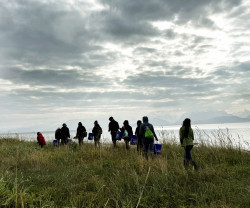
Woven Together: Taperrnaq/Rye Grass Research & Art [site in progress]
<p><strong>This collection shares educational resources made in collaboration with Alaska Native participants for learning and teaching about taperrnaq/rye grass in Alaska and about weaving with it, including instructional videos (forthcoming) and curriculum (forthcoming) adaptable to any classroom and grade level. Photos and videos from field research and workshops cover how to sustainably harvest grass and process rye grass and how to weave mats and dance fans, connecting you with the teachings of Alaska Native experts. Photos from the Smithsonian collections show examples of woven items with information about them, paired with archival and contemporary photos to connect them with home communities.</strong><strong><br></strong></p>
<p><strong>ABOUT THE PROJECT: </strong></p>
<p><strong>Woven Together: Taperrnaq Research and Art</strong> brought together intergenerational groups of Alaska Natives across Yup’ik, Dena’ina and Sugpiaq lands to teach and learn about a versatile, resilient grass found across Alaska: beach wildrye (<em>Leymus mollis</em>). Its name in Yugtun, the Yup’ik language is taperrnaq, tl’egh in Dena’ina Qenaga and tapernaq in Sugt'stun, the Sugpiaq language. This grass is also often called rye grass in English, also beach grass or seashore grass. Rye grass is important to weavers as a material for making customary items like baskets, carrying and storage bags, dance fans, liners for mittens, parkas and socks, and mats for kayaks and for room dividers, bedding and wall insulation in homes.<br></p>
<p>For the Woven Together project, Alaska Natives of Ahtna, Dena’ina, Iñupiaq, Sugpiaq (Alutiiq), Unangax̂, Upper Tanana and Yup’ik heritage participated in rye grass research outings and workshops on harvesting and weaving rye grass. For the research, the spent time with taperrnat (plural form) from March through December of 2024 at locations in Naknek, Anchorage and Homer across seasons and noting observations and cutting samples for increasing their knowledge about this material and the effects of changing seasons and changing weather patterns. Samples, photographs and detailed notes were also harvested and shared with grass collections at the U.S. National Herbarium, part of the National Museum of Natural History, and the Herbarium at the Museum of the North, part of the University of Alaska Fairbanks. Additional herbarium samples and observations were collected at Platinum, Hope and Kasilof. </p>
<p>Community workshops were another part of the Woven Together project. They were held in Naknek, Anchorage and Homer. Participants learned from Alaska Native experts Lucy Andrews (Yup’ik), Emily Johnston (Cup’ig) and June Simeonoff Pardue (Sugpiaq/Iñupiaq) how to sustainably harvest grass, process it to dry and cure (turn pale) and weave it into dance fans using a coiling technique and into small mats using a twining technique. Through the project photographs and videos on this site you can learn more about the participants and activities, and you can learn how to harvest and weave rye grass in accordance with Alaska Native values. </p>
<p>The third part of the Woven Together project was creating interdisciplinary, culturally responsive curriculum for students and lifelong learners at culture camps, in classrooms and at home. These lessons are provided for three general grade ranges and can be adapted to any grade and tailored to fit any student. Feel free to download, share and repost them.</p>
<p>This project was supported with internal Smithsonian Institution funds from the Youth Access Grants for A Community Based Approach to Culturally Responsive-Sustaining Education. This project received support from Our Shared Future, Reckoning with our Racial Past Initiative from the Smithsonian Institution and supported by a grant from the Bristol Bay Foundation. Woven Together also received support from the Ernest S. (“Tiger”) Burch, Jr. Endowment and from supporters of the Arctic Studies Center in Alaska.</p>
<p>NOTE: </p>
<p>The knowledge that Alaska Natives (Indigenous peoples of Alaska) have shared on this site is their cultural heritage, and they have cultural property rights for this knowledge. Please utilize what you learn from Alaska Natives with respect to their rights, which includes not using what you learn for personal gain such as selling artwork derived from this knowledge. To learn more about how to appreciate Alaska Native cultures respectfully, please go to the collection <a href="https://learninglab.si.edu/q/ll-c/Ha7AjCcnSBrgNbJt#r/44789">https://learninglab.si.edu/q/ll-c/Ha7AjCcnSBrgNbJt#r/44789</a><br>
on this site where you will find a video and additional resources to learn more.</p>
<p></p>
<p>Source: <a href="https://learninglab.si.edu/org/sasc-ak">Smithsonian Arctic Studies Center in Alaska</a></p>
<p>Contributor: <a href="https://learninglab.si.edu/profile/78098">Dawn Biddison</a></p>
<p><a href="https://learninglab.si.edu/profile/78098"></a></p>
<p></p>
Dawn Biddison
35
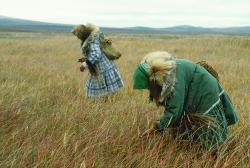
Yup’ik Ingenuity: Local Materials
<p>In the education unit “Yup’ik Ingenuity: Local Materials,” students learn about the Yup’ik people of Alaska and how they have made what they needed from natural resources obtained locally. Students make connections with sustainable harvesting, renewable resources, recycling and upcycling. Photographs with in-depth captions provide information about Yup’ik people in the past and today. A map shows geographic context. Museum items provide cultural heritage examples and feature Elders' discussions for learning directly from community members, and many include historical summaries. In an essay, school teacher Dora <em>Apurin</em> Strunk writes about the usefulness of local grasses in the Yup’ik village of Quinhagak, Alaska. Questions and activities in the unit help students understand and apply what they have read, and find shared cultural values in their own lives. To learn about weaving grass from Yup'ik experts, visit this Learning Lab entry: <a href="https://learninglab.si.edu/q/ll-c/sbmuMYcg9n5Gv0QC">https://learninglab.si.edu/q/l...</a></p>
<p>Contributor: <a href="https://learninglab.si.edu/profile/78098">Dawn Biddison</a></p>
<hr>
<p><strong>Tags: </strong>Alaska, Alaska Native, Indigenous, Yup’ik, Alaska Native art, weaving, grass basket, grass bag, grass carrying-bag, issran, taperrnaq, seashore grass, Elymus arenarius, Elymus mollis, subsistence, traditional ecological knowledge, maker, activity, museum, museum objects, artifacts, Smithsonian Arctic Studies Center in Alaska, distance learning, culturally responsive, culturally-responsive (#arcticstudies)</p>
<p></p>
Dawn Biddison
27

The Indigenous Ally: Museum Practitioner Toolkit
<p><strong>By</strong> <strong>Jenn Edginton <strong> (©2024 Jenn Edginton)</strong></strong></p>
<p>This toolkit is based on findings from a qualitative research study that included museum site visits and conversations with museum practitioners. This research found that Indigenous community members need allies within museums to feel safe, seen, and welcome in spaces. This toolkit’s goal is to help the next set of museum leaders, decolonizers, and accomplices learn to look at their institution and work critically, and enter into a space of allyship for Indigenous communities. </p>
<p>This resource is shared by recommendation from Dr. Nadia Jackinsky (Alutiiq), an art historian, independent curator and museum consultant based in the Kachemak Bay region of Alaska. The original entry appear on the International Coalition of Sites of Conscience website (November 2024) at <a href="https://www.sitesofconscience.org/member_resources/the-indigenous-ally/">https://www.sitesofconscience....</a></p>
Dawn Biddison
1
Sewing Salmon
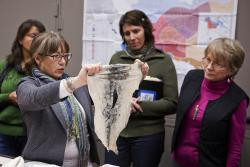
<p>The Sewing Salmon project was hosted in 2012 by the Smithsonian Institution’s Arctic Studies Center at the Anchorage Museum in Alaska and brought together three contemporary Alaska Native artists: Audrey Armstrong (Koyukon Athabascan), Coral Chernoff (Sugpiaq) and Marlene Nielsen (Yup'ik). Together they learned and taught about creating work from salmon skin through studying historic museum objects and through sharing and comparing techniques they developed. Each artist has a commitment to this almost-lost art and shared their knowledge with students and visitors, and with curators and conservators who care for museum collections. The video set presented here introduces the artists and their techniques. Links to a selection of Alaska Native objects from the Smithsonian collections made from salmon skin are included below.</p>
<p>This project was made possible through the generous support of Alaska State Council on the Arts & National Endowment for the Arts, Anchorage Museum, and the generous supporters of the Arctic Studies Center in Alaska.</p>
<p>NOTE: The knowledge that Alaska Natives (Indigenous peoples of Alaska) have shared on this site is their cultural heritage, and they have cultural property rights for this knowledge. Please utilize what you learn from Alaska Natives with respect to their rights, which includes not using what you learn for personal gain such as selling artwork derived from this knowledge. To learn more about how to appreciate Alaska Native cultures respectfully, please go to the collection <a href="https://learninglab.si.edu/q/ll-c/Ha7AjCcnSBrgNbJt#r/44789">https://learninglab.si.edu/q/ll-c/Ha7AjCcnSBrgNbJt#r/44789</a><br>on this site where you will find a video and additional resources to learn more.</p>
<p>Contributor: <a href="https://learninglab.si.edu/profile/78098">Dawn Biddison</a><br></p>
<p><strong>Tags: </strong>Alaska, Native art, museum, education, Indigenous, sew, salmon, fish skin, Athabascan, Sugpiaq, Alutiiq, Yup'ik, Iñupiaq, Smithsonian Arctic Studies Center in Alaska (#arcticstudies)</p>
Dawn Biddison
17
Salmon Give Life: Learning from Alaska’s First Peoples
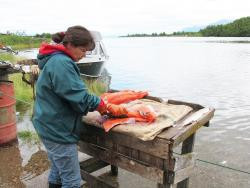
<p>There are five species of salmon in Alaska, and they are a vital food source for people living a subsistence lifestyle today and in the past. Alaska Natives determined that salmon skin, carefully processed, is a durable and waterproof material for clothing, and they have used it to make bags, boots, mittens and parkas. Alaska Native artists continue to use this material in their work.</p>
<p>The curriculum <em>Salmon Give Life: Learning from Alaska's First Peoples </em>consists of five activity-based lessons and will teach students about subsistence, with a focus on salmon, and how Alaska Natives utilize local resources to survive and thrive. The two videos referred to in curriculum Lesson 3 are provided and are part of a 10-video set on this site in the Community Videos section, titled <a href="https://learninglab.si.edu/collections/sewing-salmon-videos/0UJHYvdVhbg7e5Ga" target="_blank">Sewing Salmon</a>, where you can learn how to process and sew salmon skin from Alaska Native experts. </p>
<p>Contributor: <a href="https://learninglab.si.edu/profile/78098">Dawn Biddison</a></p>
<hr>
<p><strong>Tags:</strong> Alaska, Alaska Native, Indigenous, salmon, subsistence, traditional ecological knowledge, salmon skin, museum, museum objects, artifacts, Smithsonian Arctic Studies Center in Alaska, distance learning, culturally responsive, culturally-responsive (#arcticstudies)</p>
Dawn Biddison
21
Athabascan Moosehide Tanning & Sewing
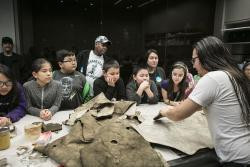
<p>Older generations of Alaska Athabascan (Dene) peoples tanned moose hides using time-tested methods to make strong, supple leather for sewing beaded or quill-embroidered tunics, jackets, mittens, bags and moccasins, as well as everyday essentials such as dogsled harnesses. Because traditional tanning is time-consuming and requires technical knowledge that has declined in recent generations, most moose hides are now sent out to commercial tanneries for processing with synthetic chemicals. Commercial tanning produces a lower quality hide, but more importantly, it displaces the passing on of Athabascan tanning knowledge. Recognizing this, contemporary artists Joel Isaak (Dena'ina Athabascan) and Melissa Shaginoff (Ahtna Athabascan) have been learning traditional methods for tanning moose hides from elders Helen Dick (Dena’ina Athabascan) and Jeanie Maxim (Ahtna Athabascan) and adding tested, contemporary tools. </p>
<p>The Alaska office of the Arctic Studies Center worked with these committed artists and elders from September 2017 through June 2018 to carry out moosehide tanning work in communities and backyards in Kenai, Chickaloon, and Anchorage, and a sewing and beading residency at the Anchorage Museum. The collaboration resulted in the set of twenty-three educational videos presented here. Links to a selection of Athabascan objects from the Smithsonian collections made from moose hide are included below.</p>
<p>This project was made possible through the generous support of The CIRI Foundation, Anchorage Museum, First National Bank of Alaska, Alaska State Council on the Arts & National Endowment for the Arts, and the generous supporters of the Arctic Studies Center in Alaska.<br></p>
<p>NOTE: The knowledge that Alaska Natives (Indigenous peoples of Alaska) have shared on this site is their cultural heritage, and they have cultural property rights for this knowledge. Please utilize what you learn from Alaska Natives with respect to their rights, which includes not using what you learn for personal gain such as selling artwork derived from this knowledge. To learn more about how to appreciate Alaska Native cultures respectfully, please go to the collection <a href="https://learninglab.si.edu/q/ll-c/Ha7AjCcnSBrgNbJt#r/44789">https://learninglab.si.edu/q/ll-c/Ha7AjCcnSBrgNbJt#r/44789</a><br>on this site where you will find a video and additional resources to learn more.</p>
<p>Contributor: <a href="https://learninglab.si.edu/profile/78098">Dawn Biddison</a></p>
<p><strong>Tags: </strong>Alaska, Native art, museum, education, Indigenous, tan, tanning, moosehide, moose hide, smoking, sew, bead, Athabascan, Dena'ina, Ahtna, Dene, Melissa Shaginoff, Joel Isaak, Smithsonian Arctic Studies Center in Alaska (#arcticstudies)</p>
Dawn Biddison
34
The Tsimshian People and Their Culture
<p><strong>The Tsimshian People and Their Culture</strong></p>
<p>By David Boxley (Tsimshian), 2009
<br></p>
<p><strong><strong>Land, Sea, Rivers</strong></strong></p>
<p>Most Tsimshian live along the coast of northern British Columbia between the Nass River and Queen Charlotte Sound. The shores and islands are covered by northern rain forests of hemlock, spruce, fir, red cedar and yellow cedar, woods that were the basic raw materials of our culture. Tsimshian territory extends into the mountainous interior as well, following the valley of the Skeena River.</p>
<p>At one time at least eight thousand Tsimshian lived there, located in twenty winter villages and many seasonal camps. Today about thirty-five hundred live in seven Canadian towns. In 1862, a Tsimshian group led by an Anglican missionary, William Duncan, broke away from Fort Simpson to found a religious colony at Old Metlakatla. Twenty-five years later they moved again, building New Metlakatla on Annette Island, in southeast Alaska. Generations have lived there since, and that is the community in which I was born and grew up. I was very fortunate to be raised by my grandfather and grandmother, Albert and Dora Bolton, who gave me a strong foundation in our culture. When I was young they took me with them to their fish camps and on trips all over our island for subsistence activities.</p>
<p>Most people still rely a great deal on fish, seals, berries and other traditional foods, supplemented by commercial fishing and other sources of cash income. In historical times, the year’s food gathering began in spring when the ice broke up on the Nass River and the eulachon began running there. People traveled from their winter villages to harvest the fish in nets, drying some and fermenting and boiling the rest to extract the oil. Trade in eulachon grease, which no other people could produce in such quantity, was one of the sources of Tsimshian wealth and prosperity. In spring they also gathered seaweed and herring eggs, fished for halibut, and collected bird eggs and abalone. During summer and fall they relocated to fishing sites on the rivers to catch salmon with weirs and traps, drying and smoking them for winter. At the winter villages they gathered clams, cockles and mussels, and if you visit those old settlements today you can still see the mounds of discarded shells. At different times of the year they hunted seals, sea lions, deer, elk, mountain goats and mountain sheep.</p>
<p>Archaeological sites in Prince Rupert Harbour demonstrate that this way of life goes back at least five thousand years. Crest objects such as chiefs’ headdresses and masks are connected to origin stories and to the succession of clan leaders who have owned and passed them down to their descendants, along with name titles and titles to land. This is important in British Columbia where the Tsimshian Nation is attempting to reclaim territories that were taken by the Canadian government in the 1870s. Crest objects and the histories attached to them validate those aboriginal claims and link the people to specific places on the land where they lived and harvested food in the old days.</p>
<p><strong>Family and Community</strong></p>
<p>My people are divided into four equal groups. Each is a <em>pteex</em> (clan) with its own principal crest: Eagle (<em>Laxsgiik</em>), Raven (<em>Ganhada</em>), Wolf (<em>Laxgibuu</em>), and Killer Whale (<em>Gisbutwada</em>). Crests are symbols of matrilineal connection, so whatever <em>pteex</em> your mother comes from, you will be the same. Because clans marry out, your father will be from a different one of the four. Within each <em>pteex</em> are multiple lineages, like branches on a family tree. Eagle, Raven, Wolf, and Killer Whale each have as many as twenty-five subcrests, a few available that are to everyone in the clan and the rest limited to certain branches. As a <em>Laxsgiik</em>, I may use the Eagle, Beaver, and Halibut crests; I inherited other, more restricted crests from my close maternal ancestors.</p>
<p>Crests represent social identity and its corresponding rights and privileges. Crest images appear on robes, button blankets, headdresses and other regalia that people wear at potlatches to show their ancestry. They are shown on ceremonial drums, staffs and rattles; on dishes and ladles used for serving food at potlatch feasts; and on the totem poles, house fronts, posts and screens of traditional lineage houses.</p>
<p>If you could go back in time to visit a coastal Tsimshian village of two centuries ago, you would see our social system at work. The community is built along the shore, with palisades around back to guard against possible attack from land. You arrive by canoe and announce your person and business while still afloat, waiting for permission to land. Jumping ashore without proper protocol would have been life threatening in those days. Coming up from the beach in the company of your hosts, you see the big red-cedar longhouses, lined up in a row with their doorways facing the water. Each is home to thirty or forty people, most of them matrilineal relatives but including wives and children of other clans.</p>
<p>The village chief’s house is the largest and is located in a central position. Its painted front panels show his crests. The other dwellings are positioned in relation to the chief’s house according to the social ranking of their household heads. In front of prestigious homes are totem poles, carved with crest emblems and figures. Poles are sculptural narratives, telling who lives in a house, the ancient origin and recent history of their lineage, and the achievements of their deceased chiefs and nobles.</p>
<p>Entering one of the longhouses requires that you stoop down to pass through a low door, a vulnerable position for any would-be attacker. Depending on the status of the house, the interior is lined with one or more levels of wood-planked sleeping platforms, like wide bleachers that step down to the central fire pit. The platforms are divided into family living areas, cordoned off with mats or boards. The house chief and his family have a private apartment at the far end of the house, behind a carved and painted wooden screen. Inside the house you see lots of preserved food—dried salmon and halibut, bentwood boxes filled with fish oil, seal grease, and berries; containers of dried meat. All of this came from hunting and fishing territories owned by the house members.</p>
<p>The original Tsimshian way of life began to change when British, Spanish and American fur traders arrived in the late 1700s. The Hudson’s Bay Company built Fort Simpson at the mouth of the Nass River in 1831, and missionaries of several Christian denominations came to work among the Tsimshian, Haida and Tlingit people who had gathered near the fort for trade. The missionaries were successful at converting a large part of the population, which was in rapid decline as a result of smallpox and other new diseases. The people gave up their traditional beliefs, ended their ceremonies and even cut down many of the totem poles.</p>
<p>The converts who followed William Duncan from Fort Simpson to Old Metlakatla and then to Alaska were making a new start, trying to survive in a world that was rapidly changing. Now, more than one hundred years later, Metlakatla is a pretty distinctive place. Little about its everyday appearance would remind a visitor of the lifeways of the past, but we are still proudly Tsimshian, with a strong sense of our unique identity. Our language, <em>Sm’Algyax</em>, has changed from the way it is spoken in Canada, and unfortunately Metlakatla has only a few fluent speakers left, all elders. That frightens me, and I’ve been trying very hard to hold on to what I know and to learn more. We are who we are, but we are what our language makes us, too.</p>
<p><strong>Ceremony and Celebration</strong></p>
<p><em>Halaayt</em> is spirit power, which comes from above. It gave chiefs and high-ranking people the knowledge and strength they needed to be leaders and to make good decisions. <em>Halaayt</em> enabled them to be the link between their people and the next world, where our ancestors dwell, and to communicate with the spirits of animals. The frontlet of a chief’s ceremonial headdress was a symbol of his <em>halaayt</em>. The face in the center was a crest, surrounded by abalone, sea lion whiskers, feathers and ermine fur. The chief’s headdress, woven robe and Raven rattle all represented his leadership and spiritual power.</p>
<p>Historically, potlatch feasts celebrated events and transitions in the community – death, marriage, the completion of a new house, the raising of a totem pole, or the settlement of a dispute between clans. The largest and most important of these feasts were memorial potlatches, when new chiefs were installed and took the names of their predecessors. Potlatches have always been based on a whole system of reciprocity. During the feast, hosts of one clan recognize and repay debts that they have incurred through services given to them by people of other clans, who come as guests.</p>
<p>Three things are essential to a potlatch. First, it has to be done publicly. The guests are there to serve as witnesses to what is taking place, and that is what makes it legal. Second, the hosts have to gift every guest in payment for his or her witness. Finally, everyone must be fed and fed very well. More than they need. The food they take home with them is another gift.</p>
<p>In 1982, I set out to organize Metlakatla’s first potlatch. For our community it would be the revival of a tradition that we had left behind over a century before in the historical move to Alaska. Many potlatches have been held in Metlakatla since then, and one of the largest was in 1994. It was originally planned as a celebration of my grandfather’s hundredth birthday, but it became his memorial after he passed away at age ninety-eight. I realized that in order for the potlatch to happen on the scale that I had hoped, it would have to include all four clans. Their involvement not only ensured the amazing success of the event but also paved the way for the future, because so many participated and learned so much. We fed a thousand people every evening, three totem poles were raised, and over fifty-five button robes were dedicated on the first night alone. I feel lucky to have come along when I did, at a time when it was right for these changes to take place. The way I grew up, and the gifts of language and culture that my grandparents gave me, prepared me for the journey.
</p>
<p>Note: This is shortened version of a longer essay from the Smithsonian book <em>Living Our Cultures, Sharing Our Heritage: The First Peoples of Alaska</em>.</p>
<hr>
<p>Tags: Tsimshian Alaska Native, Indigenous, Smithsonian Arctic Studies Center in Alaska (#arcticstudies)</p>
Dawn Biddison
20
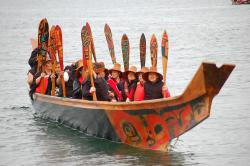
The Haida People and Their Culture
<p>By Jeane Breinig (Haida), 2009
<br></p>
<p><strong>Sea, Land, Rivers</strong></p>
<p>It’s an endless cycle – gathering food, putting it up, sharing it among the people. Subsistence is fundamental to our being, even for city-dwellers. Every summer since the kids were little, we would return to Kasaan to join in harvesting activities with family and friends. Our traditions pass on through the foods, the seasons and the generations. I am Haida <em>Yáahl-Xúuts </em>(Raven–Brown Bear), of the <em>Taslaanas</em> clan (The Sandy Beach People) at Kasaan, Alaska. By the custom of our matrilineal society, I trace my descent and clan affiliation through my mother, her mother and a long line of Raven women going back through the centuries.</p>
<p>Haida identities are linked to the history of our people. Alaskan Haida look south to Haida Gwaii (Queen Charlotte Islands, Canada) as their ancestral homeland. The present villages of Masset and Skidegate were the only settlements that remained after a smallpox epidemic ravaged Haida Gwaii in 1862. Survivors from at least seventeen other communities found refuge there. Alaskan Haida are the descendants of emigrants who left Haida Gwaii sometime before European contact. Residents of Old Kasaan, one of the original Alaskan villages, moved to (New) Kasaan in 1902, and people from Howkan, Klinkwan, and other early Alaskan Haida settlements consolidated at Hydaburg in 1911. The distance from northern Haida Gwaii to Prince of Wales Island is not great, only about thirty-five miles. It is easy to imagine our forebears going across in their canoes: the Haida are justly famous as seafarers and boat builders. Our red-cedar canoes, some large enough to carry forty passengers, traveled up and down the coasts of Alaska and British Columbia and were sought in trade by Tlingit, Tsimshian and other peoples.</p>
<p>When the salmon start jumping in Kasaan Bay, it’s time to begin gathering the foods of our land. We pick <em>s<u>g</u>hiw</em> (black seaweed) during the minus tides of May, when you can get out to the rocks where it grows. They spread it out on flat rocks to dry in the sun, took it home in gunnysacks, ground it up, and stored it as a savory food for winter. We love to eat it by the handful or sprinkle it on fish soup. As the summer goes on we fish for halibut and the different species of salmon that arrive in our waters. Sockeye from the Karta River, a staple of the diet in Kasaan, are smoked and preserved using an endless variety of family recipes. Clams, abalone, “gumboots” (chitons), crabs and shrimp are also harvested, and salmonberries, blueberries and huckleberries are picked as they ripen in succession. The men go deer hunting in the fall. Another staple is hooligan (eulachon) oil or “grease,” called <em>satáw</em> in the Haida language. Haida traditionally bartered for fish grease and soapberries from the Tsimshian in exchange for our dried seaweed and halibut. That kind of trading still goes on at the annual Alaska Federation of Natives convention every October, when everyone brings specialties from home to exchange for favorite foods from other places.</p>
<p><strong>Family and Community</strong></p>
<p>In a traditional Haida village, cedar-plank longhouses stood side by side, each paired with a tall pole displaying the crest animals of the clan members who resided there. An opening through base of the pole, representing the mouth or stomach of the lowest crest figure, served as the doorway to some houses. Like other southeast Alaskan peoples, the Haida are socially divided between Ravens and Eagles, each half (moiety) composed of numerous matrilineal clans. Traditional marriages were always between a member of a Raven clan and a member of an Eagle clan. The residents of a longhouse included multiple generations of male clan members and women of other clans who came there to live with their husbands.</p>
<p>Much of a child’s education was the responsibility of clan mentors outside the nuclear family: for a boy, this was his maternal uncle, and for a girl, her maternal aunt. On their pathways to adulthood, children received the names of ancestors, as well as piercings and tattoos that signified their clan and rank. Children still learn through watching and participating in the activities of the community. Our oral tradition is another participatory way of learning. Elders teach through stories, although the message may be indirect. If you seek an elder’s counsel, you might hear a tale about another place and time. It is up to you to think about the meaning and apply it to your own life.</p>
<p>The worst horrors of Haida contact with the West were waves of epidemic disease – smallpox, influenza, tuberculosis, whooping cough and others – that consumed the aboriginal population, unchecked by natural immunity. Perhaps fourteen thousand Haida in the 1780s had withered to six hundred by 1915. It is hard to imagine loss on that scale, not only of life, but also of culture and heritage. Most of the clan leadership was gone, and consolidation of the widespread population into just a few villages almost destroyed the complex social system as it had functioned until then.</p>
<p>Haida oral literature is renowned for its epic tales of battles and migrations, transformations from animals to human beings and vice versa, and journeys to spirit worlds in the sky and underwater. Other Haida tales, especially Raven stories, are simply fun with a touch of mystery. Raven, the comical trickster is always in trouble. Elders say that he turned black by getting stuck in the smoke hole of a house and being too fat and lazy to escape.</p>
<p>Today there are fewer than a dozen fluent Alaskan Haida speakers. I am fortunate that my mother, Julie Coburn, is one of them. Her Haida name is <em>Wahlgidouk</em>, “Giver of Gifts,” meaning a person who brings in presents to be distributed at a ceremonial giveaway, or potlatch. She has been giving the gifts of language and literature throughout her life. Keeping her language was a kind of heroism under all the pressures for acculturation. Her parents, concerned about their children’s survival in Western culture, spoke Haida to them at home but asked them to answer in English. At her boarding school in Sitka, speaking Haida was harshly punished. But as an adult in her fifties, she recognized that the language was fading away, so she relearned it and now has had the good fortune also to teach others. She participated in the Haida Society for the Preservation of Haida Language and Literature and contributed to work accomplished at the Alaska Native Language Center when Haida elders developed a standardized writing system.</p>
<p><strong>Ceremony and Celebration</strong></p>
<p>In 1880, Chief Son-I-Hat built <em>Neyúwens</em> ("Great House") near Kasaan Bay, a mile from the location where New Kasaan was later founded. That structure, today called the Whale House, was restored in 1938 by Haida craftsmen working for the Civilian Conservation Corps. The restoration included the house’s crest pole and carved interior posts, which portray <em>Coon-Ahts</em>, a legendary figure who captured the monster <em>Gonaqadate</em> and put on his skin to hunt whales. Surrounding the house are additional totem poles brought over from Old Kasaan and restored, along with copies of several more. The Whale House is the only surviving traditional Haida clan house in Alaska.</p>
<p>The English word potlatch has been used for traditional Haida ceremonies that centered on feasting, dancing and the distribution of property by chiefs and other leaders. The Haida word is <em>'wáahlaal</em>. The largest potlatches marked the completion of a new clan house or the death of a chief and succession of his heir. Chief Son-I-Hat, one of the wealthiest Haida leaders, hosted numerous potlatches before his death in 1912. Potlatches were outlawed by the Canadian government in 1884, and they were discouraged by Christian missionaries who came to the Haida region in the 1870s and 1880s.</p>
<p>Despite attempts to suppress of our traditional ceremonies, we still hold feasts and memorial potlatches, but now in transformed ways. Traditionally, potlatches represented a time for the deceased person’s clan to repay those from other clans who had helped them at the time of the death. In many respects, a potlatch can be viewed as a social occasion but with very formal aspects, acknowledging the sadness of the loss but also marking the end of mourning. Potlatches are also the time to repay those who have served as witnesses for naming ceremonies. By accepting a gift, recipients acknowledge that the name is legally granted within the traditional Haida system.</p>
<p>We are celebrating and revitalizing Haida culture in southeast Alaska. Teaching the language and rebuilding the Whale House are just a part of it. Every summer in Kasaan, a culture camp for the kids is held, with storytelling, dancing and subsistence activities. They want to learn and are so proud of their heritage. What does it mean to be Haida? The answer now is different from that of the past, obviously. We need to know our history and learn from it. We need to know our culture and draw strength from it. We need to make it work for us today.</p>
<p>Note: This is shortened version of a longer essay from the Smithsonian book <em>Living Our Cultures, Sharing Our Heritage: The First Peoples of Alaska</em>.</p>
<hr>
<p>Tags: Haida, Alaska Native, Indigenous, Smithsonian Arctic Studies Center in Alaska (#arcticstudies)</p>
Dawn Biddison
20
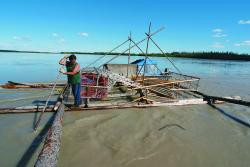
The Dene/Athabascan Peoples and Their Cultures
<p>Note (2025): In recent years, the name Dene is used by Alaska Native scholars instead of Athabascan, but both are currently utilized. <br></p>
<p>By Eliza Jones (Koyukon), 2009
<br></p>
<p><strong>Sea, Land, Rivers</strong></p>
<p>When I was growing up in the 1940s and ’50s, our family moved in every season – to spring camp for ducks and muskrats, to fish camp in summer, and to hunting and fur-trapping sites during fall and winter. That kind of traveling life was once universal in Athabascan country, from the Arctic Circle to Cook Inlet in Alaska and across the western interior of Canada. It’s a vast territory, hundreds of thousands of square miles covered by boreal spruce and birch forest. The rivers that cross it were highways for dog sledding in winter and canoe voyages in summer. Today the rivers, along with air and snow machine travel, still link our scattered communities, but roads reach only a few.</p>
<p>Athabascan peoples are an ancient family that spread out across the land and gradually grew apart. Koyukon, Gwich’in, Han, Holikachuk, Deg Hit’an, Upper Kuskokwim, Tanana, Tanacross, Upper Tanana, Dena’ina, and Ahtna communities occupy different areas of interior and southern coastal Alaska. Their languages share the same complex grammar yet have developed different vocabularies. The people have varying subsistence practices, customs, ceremonies, and clan structures. The Eyak, who live on the southern Alaskan coast around the mouth of the Copper River, are more distant relatives.</p>
<p>In Athabascan belief, everything around us has life. The land and trees have spirits, and we treat them with respect. If we need to cut a tamarack, which has the best wood for making fish traps, it is Koyukon courtesy to explain our need to the tree and to leave an offering of a bead or ribbon behind. Animals and fish are given the same kind of care. Before bringing a mink carcass into our cabin, my mother or stepfather would rub its nose with grease so that its spirit would not be offended by the human scent inside. If they trapped a fox, they put a bone in its mouth, because the animal was seeking food when it met its death.</p>
<p><strong>Community and Family</strong></p>
<p>Western cultural influence came to Athabascan country in the late eighteenth and early nineteenth centuries when Russian fur traders set up forts in southern Alaska and the Hudson’s Bay Company built a post at Fort Yukon. Later in the century, the U.S. government and the Alaska Commercial Company took over from the Russians. The gold rushes of the 1880s and 1890s brought a flood of miners, settlers, and traders into the region. Our communities became less nomadic, more tied to trapping and a cash economy, and increasingly dependent on clothing, guns, food, and tools from the company stores. Through the efforts of missionaries most Athabascans adopted Christianity by the early 1900s. The twentieth century brought new technologies, mass media and Western schools where the teaching was in English only. </p>
<p>One of the biggest changes in my lifetime has been in the way that our children learn. I grew up in an oral tradition in which all our teachers were family and kin. Story telling time, as we called it, began in October after freeze-up. We would be home in our small cabin, chores finished for the day, our mother sewing by the light of an oil lamp. My stepfather would tell a <em>kk’edon ts’ednee</em>, a story in our language about ancient times when animals were human beings. It would include a lot of repetition to make it easier to learn and remember and a lesson about living in harmony with nature and people. Before he continued the next night, we had to repeat the story back to him, line by line. At other times we listened while adults talked and reminisced but were not allowed to interrupt. If we had a question we asked our grandmother or someone else about it later.</p>
<p>I was taught to read and write in English by my mother, Josie Peter Olin, who was educated as a child at the Allakaket Episcopal mission school. I was fourteen when the first one-room government school was built in our village, and I attended it for three years to finish the work of all twelve grades. I moved to Koyukuk to marry Benedict Jones, and there we raised our children. I worked as a volunteer health aide, and he was village Chief. In 1970 we moved to Fairbanks, where I worked at the Alaska Native Language Center editing a Koyukon Athabascan dictionary compiled by Jules Jetté, a Jesuit priest who came to the region in 1898 and learned to speak our language fluently. That dictionary turned into my life’s work. It contains detailed information about Koyukon culture as well as language, including knowledge that no longer exists in our communities. After we retired and came back to Koyukuk, I taught Koyukon in the school, hoping that a new generation would know and continue our culture despite the huge changes and challenges that affect their young lives.</p>
<p><strong>Ceremony and Celebration</strong>
</p>
<p>Our midwinter celebrations take place between Christmas and New Year’s. There are church gatherings, children’s programs, snowshoe races, dogsled races and dances. On New Year’s Day we finish with a celebratory potlatch. People save and prepare special foods and make new clothing and beaded moccasins to wear for the dances. Spring Carnival takes place in early April at the end of beaver trapping season. We do a lot of traveling to other villages to share in their celebrations. It’s a wonderful and exciting time, with high-stakes dogsled races, snowshoe competitions, ice-picking contests, Athabascan fiddling and dancing every night.</p>
<p>Today, Athabascan communities hold potlatches on various occasions. Some are informal festivities to celebrate holidays, and others are formal and spiritual occasions to recognize turning points in the lives of community members. Potlatches can mark a first successful hunt, a homecoming, recovery from an illness or settlement of a grievance.</p>
<p>The most important and universal events are memorial potlatches held a year or more after a death to honor the memory of the deceased and to repay those who assisted the family during their time of grief. These are the helpers who built the casket, dug the grave, provided food for the vigil or sewed traditional clothing to dress the body. To prepare for a memorial potlatch, the hosts make, buy and gather large quantities of gifts and food. Often several families join together to share the financial burden. Hosts are not trying to show off their wealth. It is our way of thanking those who generously gave service. The protocols, songs, and dances for memorial potlatches vary among the different Athabascan peoples, yet the fundamental idea of the whole community marking the passage of a human soul to the world beyond is the same for all.</p>
<p>In Koyukuk, a memorial potlatch takes place over a three-day period. Residents and guests from other villages arrive with food for a gathering in the community hall. Friends and relatives sing songs they have composed for the deceased to commemorate his or her unique accomplishments, personality and service to others, and with the songs there is dancing. It is an emotional and difficult time for the family. To lift their spirits everyone joins afterward in singing old familiar songs and dancing to fiddle music or rock and roll. On the last day all of the guests sit down for a feast of special foods, including dishes that the deceased person most enjoyed. After the meal the hosts distribute gifts to everyone in attendance, with the finest presents reserved for the funeral helpers and composers of memorial songs.</p>
<p>Note: This is shortened version of a longer essay from the Smithsonian book <em>Living Our Cultures, Sharing Our Heritage: The First Peoples of Alaska</em>.</p>
<hr>
<p>Tags: Athabascan, Alaska Native, Indigenous, Smithsonian Arctic Studies Center in Alaska (#arcticstudies)</p>
<p></p>
Dawn Biddison
20
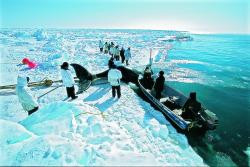
The Iñupiaq People and Their Culture
<p>By Beverly Faye Hugo (Iñupiaq), 2009<br></p>
<p><strong>Sea, Land, Rivers</strong><br></p>
<p>There’s ice and snow, the ocean and darkness – darkness in the winter and twenty-four hours of daylight in the summer. Barrow was originally called Utqiaġvik (meaning, “the place where <em>ukpik</em>, the snowy owl, nests”). That’s where my people, the Iñupiat, have survived and lived, and I am doing as they have done. On the Arctic coast you can see vast distances in all directions, out over the ocean and across the land. The country is very flat, with thousands of ponds and lakes, stretching all the way to the Brooks Range in the south. It is often windy, and there are no natural windbreaks, no trees, only shrubs. Beautiful flowers grow during the brief summer season. The ocean is our garden, where we hunt the sea mammals that sustain us. Throughout the year some seasonal activity is going on. We are whaling in the spring and fall, when the bowheads migrate past Barrow, going out for seals and walrus, fishing, or hunting on the land for caribou, geese, and ducks.</p>
<p>Whaling crews are made up of family members and relatives, and everyone takes part. The spring is an exciting time when the whole community is focused on the whales, hoping to catch one. The number we are permitted to take each year is set by the Alaska Eskimo Whaling Commission and the International Whaling Commission. Whaling is not for the faint of heart. It can be dangerous and takes an incredible amount of effort – getting ready, waiting for the whales, striking and pulling and towing them. But the men go out and do it because they want to feed the community. Everyone has to work hard throughout the whaling season. People who aren’t able to go out on the ice help in other ways, such as buying supplies and gas or preparing food. You have to make clothing for them; they need warm parkas, boots, and snow pants.</p>
<p>We believe that a whale gives itself to a captain and crew who are worthy people, who have integrity – that is the gift of the whale. Caring for whales, even after you’ve caught them, is important. After a whale is caught and divided up, everyone can glean meat from the bones. Each gets his share, even those who don’t belong to a crew. No one is left out.</p>
<p>We are really noticing the effects of global warming. The shorefast ice is much thinner in spring than it used to be, and in a strong wind it will sometimes break away. If you are out on the ice, you have to be extremely conscious of changes in the wind and current so that you will not be carried off on a broken floe. We are concerned as well about the effects of offshore drilling and seismic testing by the oil companies. They try to work with the community to avoid problems, but those activities could frighten the whales and be detrimental to hunting.
</p>
<p><strong>Community and Family</strong>
</p>
<p>Iñupiaq residents of Barrow, Wales, Point Hope, Wainwright, and other coastal communities, are the Taġiuqmiut, “people of the salt.” People who live in the interior are the Nunamiut, “people of the land.” The Nunamiut used to be nomadic, moving from camp to camp with their dog teams, hunting and fishing to take care of their families. They packed light and lived in skin tents, tracking the caribou and mountain sheep. My husband, Patrick Hugo, was one of them. For the first six years of his life his family traveled like that, but when the government built a school at Anaktuvuk Pass in 1959 they settled there.</p>
<p>My parents, Charlie and Mary Edwardson, were my foremost educators. They taught me my life skills and language. When I came to awareness as a young child, all the people who took care of me spoke Iñupiaq, so that was my first language. Our father would trap and hunt. We never went hungry and had the best furs for our parkas. Our mother was a fine seamstress, and we learned to sew by helping her. My mother and grandmother taught us to how to care for a family and to do things in a spirit of cooperation and harmony.</p>
<p>I was a child during the Bureau of Indian Affairs era, when we were punished for speaking Iñupiaq in school. My first day in class was the saddest one of my young life. I<em> had</em> to learn English, and that was important, but my own language is something that I value dearly and have always guarded. It is a gift from my parents and ancestors, and I want to pass it on to my children and grandchildren and anyone who wants to learn.
</p>
<p><strong>Ceremony and Celebration</strong>
</p>
<p><em>Nalukataq </em>(blanket toss) is a time of celebration when spring whaling has been successful. It is a kind of all-day picnic. People visit with friends and family at the windbreaks that the crews set up by tipping the whale boats onto their sides. At noon they serve <em>niġliq</em> (goose) soup, dinner rolls, and tea. At around 3:00 P.M. we have <em>mikigaq</em>, made of fermented whale meat, tongue, and skin. At 5:00 they serve frozen <em>maktak</em> (whale skin and blubber) and <em>quaq</em> (raw frozen fish). It’s wonderful to enjoy these foods, to talk, and catch up with everyone at the end of the busy whaling season.</p>
<p><em>Kivgik</em>, the Messenger Feast, was held in the <em>qargi</em> (ceremonial house). The <em>umialgich</em> (whaling captains) in one community sent messengers to the leaders of another, inviting them and their families to come for days of feasting, dances, and gift giving. They exchanged great quantities of valuable things – piles of furs, sealskins filled with oil, weapons, boats, and sleds. That took place until the early years of the twentieth century, when Presbyterian missionaries suppressed our traditional ceremonies, and many of the communal <em>qargich</em> in the villages were closed down.</p>
<p>In 1988, Mayor George Ahmaogak Sr. thought it was important to revitalize some of the traditions from before the Christian era, and <em>Kivgik</em> was started again. Today it is held in the high school gymnasium. People come to Barrow from many different communities to take part in the dancing and<em> maġgalak</em>, the exchange of gifts. You give presents to people who may have helped you or to those whom you want to honor. <em>Kivgiq</em> brings us together as one people, just as it did in the time of our ancestors.</p>
<p>Note: This is shortened version of a longer essay from the Smithsonian book <em>Living Our Cultures, Sharing Our Heritage: The First Peoples of Alaska</em>.</p>
<hr>
<p>Tags: Iñupiaq, Inupiaq, Alaska Native, Indigenous, Smithsonian Arctic Studies Center in Alaska, whale, whaling, human geography (#arcticstudies)</p>
Dawn Biddison
20
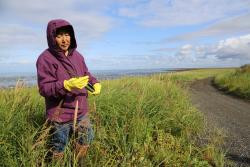
Weaving a Yup’ik Issran (Grass Carrying-Bag)
<p>In 2019, the Alaska office of the Smithsonian Arctic Studies Center partnered with Qanirtuuq Inc. of Quinhagak, Alaska, to research and document the Yup’ik tradition of weaving an<em> issran</em> (grass carrying-bag) in their community. Local artist Grace Anaver joined the team as lead artist, under the guidance of her older sister Pauline Beebe and assisted by her younger sister Sarah Brown. Locally harvested <em>taperrnaq</em> (coarse seashore grass) was gathered and processed for drying and curing in July, and grass from the previous fall was dyed. In August, Grace taught Yup’ik grass weavers and learners how to twine an <em>issran</em> in the Nunalleq Culture & Archaeology Center. The set of eleven videos presented here – Material Traditions: Weaving a Yup’ik <em>Issran </em>(Grass Carrying-Bag) – includes detailed information, instructions and demonstrations. Links to a selection of Yup’ik grass carrying-bags from the Smithsonian collections are included, and a link to a recommended educational resource about Yup’ik heritage. <br></p>
<p>This project was made possible through the generous support of The CIRI Foundation, First National Bank of Alaska, and the generous supporters of the Arctic Studies Center in Alaska.</p>
<p>NOTE: The knowledge that Alaska Natives (Indigenous peoples of Alaska) have shared on this site is their cultural heritage, and they have cultural property rights for this knowledge. Please utilize what you learn from Alaska Natives with respect to their rights, which includes not using what you learn for personal gain such as selling artwork derived from this knowledge. To learn more about how to appreciate Alaska Native cultures respectfully, please go to the collection <a href="https://learninglab.si.edu/q/ll-c/Ha7AjCcnSBrgNbJt#r/44789">https://learninglab.si.edu/q/ll-c/Ha7AjCcnSBrgNbJt#r/44789</a><br>on this site where you will find a video and additional resources to learn more.</p>
<p>Contributor: <a href="https://learninglab.si.edu/profile/78098">Dawn Biddison</a><a href="https://learninglab.si.edu/org/sasc-ak"></a></p>
<p>Tags: Alaska, Native art, museum, education, Indigenous, Yup’ik, Quinhagak, weaving, twining, grass basket, grass bag, grass carrying-bag, issran, taperrnaq, seashore grass, Elymus arenarius, Elymus mollis, Nunalleq Culture and Archaeology Center, Smithsonian Arctic Studies Center in Alaska (#arcticstudies)</p>
Dawn Biddison
23
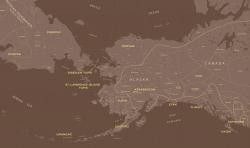
Alaska Native Territories
<p>Alaska is home to over 100,000 Indigenous residents who represent twenty distinctive cultures and languages. The maps show cities, towns and villages where most people live today, but depict Alaska Native territories as they existed in about 1890, before the main influx of Euro-American settlers. </p>
<p>Note (2025): In recent years, the name Dene is used by Alaska Native scholars instead of Athabascan, but both are currently utilized. </p>
<hr>
<p>Map information is courtesy of Michael Krauss, Igor Krupnik, Ives Goddard and the Alaska Native Language Center (University of Alaska Fairbanks). Maps courtesy of the <a href="https://learninglab.si.edu/org/sasc-ak">Smithsonian Arctic Studies Center</a>.
</p>
<p>(#arcticstudies)</p>
Dawn Biddison
11
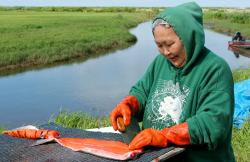
The Yup'ik People and Their Culture
<p>By Alice <em>Aluskak</em> Rearden (Yup'ik), 2009
<br></p>
<p><strong>Sea, Land, Rivers</strong></p>
<p>The Yup’ik homeland in southwest Alaska extends from Bristol Bay to Norton Sound and centers on the great delta where the Yukon and Kuskokwim rivers reach the sea. It is a country of treeless tundra, countless lakes and low mountain ranges. Almost seventy Yup’ik communities are situated along the Bering Sea coast and lower courses of the two rivers, including the Kuskokwim village of Napakiak, where I grew up.</p>
<p>Whenever I ask elders about the traditional way of life on this land, they always say, “<em>Caperrnarqellruuq</em> – how difficult, how daunting it was back then.” Previous generations had to master a wide range of specific knowledge that was critical to their survival. You can see the meticulous care they took in making their tools: with a harpoon, you had to know the right wood to use, where to attach the lines, and how to balance it perfectly so that it would be effective. The values they lived by—cooperation, generosity, diligence, humility and respect for others—were just as important as skill and knowledge in sustaining their communities.</p>
<p>The contemporary Yup’ik lifestyle is easier than the traditional one, although people still work incredibly hard to provide for their families. We have Western schooling and such amenities as store-bought goods and clothing, although the cost of those things is high in rural Alaska. The environment around us remains the primary source of what we need, but it takes less effort to subsist by hunting and fishing with the guns, snow machines and other equipment that we depend on today than it took with the equipment of the past.</p>
<p>My grandparents helped care for me during childhood, and they were hard-working people who taught us how to honor Yup’ik values and utilize the resources of the land. I remember my grandmother preparing and preserving the food that my grandfather brought home from the wilderness in different seasons—blackfish, whitefish, migratory birds, caribou and moose. He had a full-time job, but was an active subsistence hunter as well. My grandmother was very concerned that we never waste food. Although she did not explain it directly, I came to understand that she was concerned that such negligence would show disrespect to the animals and diminish my grandfather’s success as a hunter.</p>
<p><strong>Community and Family</strong></p>
<p>At a certain time a child becomes aware of life. A baby will be sitting and looking around when an expression of surprise and delight comes to her face. My mom will say “<em>Ellangartuq</em> – she has just become aware.” <em>Ella</em> is the word for awareness, but it also means weather, the world, the universe; as human beings we gradually wake up to a consciousness of all that exists. Different stages of awareness occur during a child’s growth. For that reason it is important to be extremely careful around babies; their early perceptions will shape the rest of their lives. They will be stronger people later on if they have a quiet environment where they are never startled, or scared, or exposed to inappropriate behavior.</p>
<p>I grew up speaking Yup’ik as my first language and was also one of the first children to benefit from the bilingual education program that was started in the Napakiak schools. From kindergarten through elementary school I took classes that were taught in Yup’ik, and during those years I learned to read and write the language. Later on I took a Yup’ik course at the University of Alaska Fairbanks and after graduation used my training to work as a Yup’ik transcriber and translator. The work was extremely difficult at first! I was not an expert in the subtleties of grammar and structure, and the speakers used terminology that was new to me. I had to ask many people about some of the words and to check that I fully understood their meanings. I was excited by what I was doing and found it rewarding to learn new aspects of Yup’ik culture and history.</p>
<p>In listening to elders’ words, I have been impressed by the passion they feel about young people learning to appreciate the traditional values so that they can lead better lives and contribute to the health of their communities. Elders see how much has been lost as a result of cultural and material change and the shift away from Yup’ik ways of learning, being and speaking. Alcoholism, loss of respect for others, broken families and hopelessness come from losing that vital connection to cultural knowledge and identity.</p>
<p><strong>Ceremony and Celebration</strong></p>
<p>Our traditional spiritual life was based on the recognition that all things have <em>ella</em>, awareness. Elders were taught that if you are out walking and see a piece of driftwood sticking out of the mud, you should pull it out and turn it over so that the muddy part can dry. That piece of wood is alive and aware, and it will feel gratitude for your kindness.</p>
<p>Elders have told us about the masked dance ceremonies of the past. The winter celebrations honored the <em>yuit</em>, or inner persons, of the animals, and the dances were a kind of prayer that asked for these spirits to give their physical bodies to meet the needs of the community. Shamans made carvings or masks representing animals – walrus, caribou, seals and others. When the masks were danced in the <em>qasgiq</em> (community house), it was a petition for those animals to return in the spring. During <em>Nakaciuryaraq</em>, the Bladder Festival, the bladders of seals that had been taken by hunters during the year were returned to the sea through a hole in the ice, allowing those seals to be reborn in new bodies.</p>
<p><em>Kevgiq</em>, the Messenger Feast, was a spring festival for sharing and bringing communities together. People worked hard throughout the year, gathering plants, hunting furs and harvesting food, and <em>Kevgiq</em> was a time to distribute some of what they had earned to others. Parents were especially proud if one of their children had contributed to the family’s effort for the first time – a son who brought home his first game or a daughter who caught a pike through the ice. Those events were recognized as rites of passage that meant the child was beginning a lifetime of providing for kin and community. By giving away at <em>Kevgiq</em>, a family ensured the future success of its children and the prosperity of the whole group. Villages still carry out the Messenger Feast tradition of inviting guests from other places and distributing presents to them. The dancing and gift-giving represent the same values as in the past, even if some of the items are store-bought goods. It is about giving generously to others and celebrating the success of the subsistence harvest.</p>
<p>Note: This is shortened version of a longer essay from the Smithsonian book <em>Living Our Cultures, Sharing Our Heritage: The First Peoples of Alaska</em>.</p>
<hr>
<p>Tags: Yup'ik, Alaska Native, Indigenous, Smithsonian Arctic Studies Center in Alaska (#arcticstudies)</p>
Dawn Biddison
21
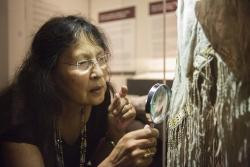
Gifts from the Land: Lifeways and Quill Art of the Athabascan Peoples (#arcticstudies)
<p>Athabascan territories cover nearly half the state of Alaska, and these lands have diverse environments and wild resources that Athabascans respect, harvest and share. Wild resources are used for food and for materials to make things. For example, Athabascan peoples harvested porcupine to eat and also carefully processed its quills into a fine material to beautify special items, and Athabascan artists continue to use quill in their work. Artists today wrap, sew and weave quills onto clothing, bags and boxes made from tanned moose and caribou hide, like their ancestors did in the past.</p>
<p>The "Gifts from the Land" curriculum consists of five activity-based lessons and will teach students about the Athabascan peoples of Alaska: their languages, traditional values and knowledge, subsistence lifeways, and historic artifacts, with a focus on porcupines as a local resource and its quills as an artistic material. The three videos referred to in curriculum Lesson 4 are provided below and are part of a 8-video set on this site in the Community Videos section, titled <a href="https://learninglab.si.edu/collections/quill-art-videos/uHUB4qy9xX4CdnzY#" target="_blank">Creating Quillwork</a>, where you can learn from Athabascan experts how to process and dye porcupine quills and make them into artwork.<br></p>
<p>Contributor: <a href="https://learninglab.si.edu/profile/78098">Dawn Biddison</a></p>
<hr>
<p>Tags: Alaska, Alaska Native, Indigenous, Athabascan, Dene, subsistence, traditional ecological knowledge, museum, museum objects, artifacts, quill, porcupine, Smithsonian Arctic Studies Center in Alaska, distance learning, culturally responsive, culturally-responsive</p>
Dawn Biddison
15
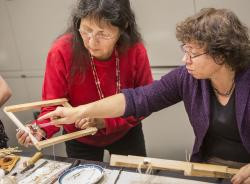
Creating Quillwork
<p>Athabascan peoples harvested porcupine to eat and also carefully processed its quills into a fine material to beautify special items. Some artists continue to use quill in their work. In 2013, the Smithsonian Arctic Studies Center in Alaska hosted the Dene Quill Art project, bringing together Koyukon Athabascan artists Shirley May Holmberg and Emma Hildbrand with ethnographic conservator Nancy Fonicello to share quillwork techniques and develop new ones by studying historic museum pieces. They shared their expertise with students, museum visitors and local Alaska Native artists, along with conservators who learned how to better care for quillwork objects in museum collections. The video set presented here introduces participants and provides detailed demonstrations of how to work with quill from cleaning and dying, to sewing, wrapping folding and weaving. Links to a selection of Alaska Native objects from the Smithsonian collections made with porcupine quill are included below.</p>
<p>NOTE: The knowledge that Alaska Natives (Indigenous peoples of Alaska) have shared on this site is their cultural heritage, and they have cultural property rights for this knowledge. Please utilize what you learn from Alaska Natives with respect to their rights, which includes not using what you learn for personal gain such as selling artwork derived from this knowledge. To learn more about how to appreciate Alaska Native cultures respectfully, please go to the collection <a href="https://learninglab.si.edu/q/ll-c/Ha7AjCcnSBrgNbJt#r/44789">https://learninglab.si.edu/q/ll-c/Ha7AjCcnSBrgNbJt#r/44789</a><br>on this site where you will find a video and additional resources to learn more.</p>
<p>Contributor: <a href="https://learninglab.si.edu/profile/78098">Dawn Biddison</a></p>
<p><strong>Tags: </strong>Alaska, Native art, Alaska Native, Indigenous, Athabascan, Dene, museum, education, Indigenous, quill, porcupine, conservator, Smithsonian Arctic Studies Center in Alaska (#arcticstudies)<br></p>
Dawn Biddison
15
Smithsonian Arctic Studies Center in Alaska (https://learninglab.si.edu/org/sasc-ak) (#arcticstudies)
<p>Alaska Native heritage is woven from the beliefs, values, knowledge and arts of the Iñupiaq, Athabascan, St. Lawrence Island Yupik, Yup'ik, Unangax̂, Sugpiaq, Eyak, Tlingit, Haida and Tsimshian peoples. Their diverse languages, cultures and histories are the foundation for contemporary lives. </p>
<p>We invite teachers, students, parents and lifelong learners to explore Alaska Native cultures, museum objects, communities, videos and educational resources shared here. Learn about the peoples of this northern world from elders, culture-bearers, scholars and artists: <a href="https://learninglab.si.edu/org/sasc-ak">https://learninglab.si.edu/org/sasc-ak</a>.</p>
<p><strong>About Us:</strong> In 1994, the Smithsonian Institution’s Arctic Studies Center (ASC) opened an office in Alaska at the Anchorage Museum, where staff members work with Alaska Natives on collaborative research and educational programs. In 2010, ASC opened the long-term exhibition <em>Living Our Cultures, Sharing Our Heritage: The First Peoples of Alaska</em>. It presents Indigenous voices, perspectives and knowledge through more than 600 masterworks of Alaska Native art and design from the Smithsonian’s National Museum of Natural History and National Museum of the American Indian collections. Through their ongoing work, the ASC makes Smithsonian resources accessible to Alaska Natives and the general public.</p>
Dawn Biddison
1
Alaska Native Museum Sovereignty Guide: Case Studies Toward Equity with Alaska Native Peoples (Living Document)
<p>© 2024 Alaska Native Museum Sovereignty Group</p>
<p>The care of Alaska Native cultural belongings in museums is a responsibility that requires deep respect for Indigenous knowledge and traditions. The <strong>Alaska Native Museum Sovereignty Guide</strong>, developed by The CIRI Foundation in partnership with an advisory circle of Alaska Native scholars, artists, and community members, provides museums with guidelines for respectful collaboration with Alaska Native communities. This resource shares best practices for museums to follow, ensuring that Indigenous cultural practices are honored and museums become more accessible and welcoming to Alaska Native communities.</p>
<p>Posting of this document by Dawn Biddison was approved by Dr. Nadia Jackinsky-Sethi, Contributor and Alaska Native Museum Sovereignty Group member.</p>
<p>Please note: This guide was not created by Dawn and is noted as this due to a limitation in the platform's options.<br></p>
Dawn Biddison
1