
Nicole Vance Nash's collections
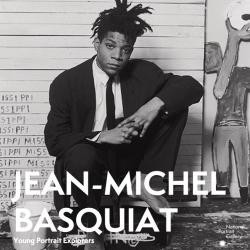
Jean-Michel Basquiat: Young Portrait Explorers
<p>Learn about symbols in art and explore the symbolism in Jean-Michel Basquiat’s work.</p>
<p><br>#NPGteach </p>
 Nicole Vance Nash
22
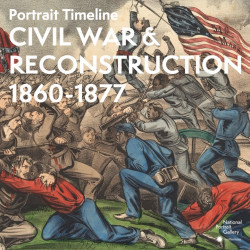
Civil War and Reconstruction (1860-1877) with the National Portrait Gallery
<p>This portrait timeline spotlights portraits of individuals who shaped the history, development, and culture of what is now the United States of America between the years 1860 and 1877.</p>
<p>#NPGteach</p>
<p>Keywords: Civil War, Abolition, Emancipation Proclamation, Dred Scott Decision, Mason Dixon Line, North, South, Union, Confederacy, Sectionalism, Reconstruction, Suffrage, Thirteenth Amendment, Fourteenth Amendment, Fifteenth Amendment, Senators, Presidents</p>
Nicole Vance Nash
59
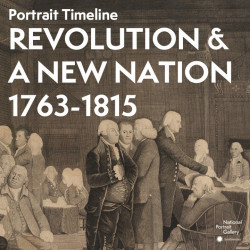
Revolution and New Nation (1763-1815) with the National Portrait Gallery
<p>This portrait timeline spotlights portraits of individuals who shaped the history, development, and culture of what is now the United States of America between the years 1763 and 1815.</p>
<p>#NPGteach</p>
<p>Keywords: Revolution, Revolutionary War, Continental Congress, Democracy, Patriot, Declaration of Independence, Constitution</p>
Nicole Vance Nash
72
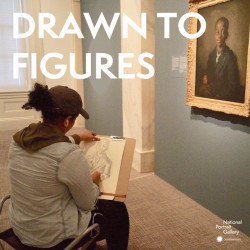
Drawn to Figures with the National Portrait Gallery
<p>Discover your inner artist in this online workshop on sketching the human body. Artist Jill Galloway will highlight the techniques and challenges of figure drawing while providing guided instruction and helpful tips. Open to all skill levels, ages 13 and up.</p>
<p>Join us for new videos Thursdays at 11:00am EST on <a href="https://www.youtube.com/smithsoniannpg" target="_blank" data-saferedirecturl="https://www.google.com/url?q=https://www.youtube.com/smithsoniannpg&source=gmail&ust=1605886355234000&usg=AOvVaw01p62fkn0GK_K4Vt581Wsl">YouTube@smithsoniannpg</a></p>
<p>#NPGteach</p>
<p>Keywords: Drawing, Figure Drawing, Portraiture, Shading, Contouring, Proportions, How to, Face, Nose, Mouth, Eyes, Expression, Pose, Hands, Feet, Skin tones, Human Body, Artistic Techniques, Guided Drawing Instruction<br></p>
Nicole Vance Nash
134
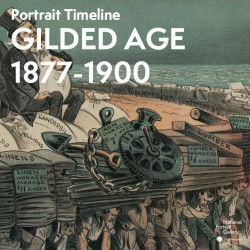
Gilded Age (1877-1900) with the National Portrait Gallery
<p>This portrait timeline spotlights individuals who shaped the history, development, and culture of what is now the United States of America between the years 1877 and 1900.</p>
<p>#NPGteach</p>
<p>Keywords: Gilded Age, Progressive Era, Industrial Revolution, <a>Wounded Knee-Massacre</a>, <a>Monopoly, Depression of 1893, Muckrakers, Social Darwinism, Suffrage, Temperance</a><br></p>
Nicole Vance Nash
51
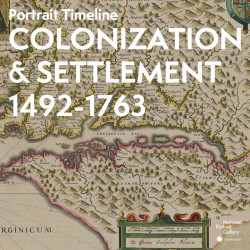
Colonization and Settlement (1492-1763) with the National Portrait Gallery
<p></p>
<p>This portrait timeline spotlights portraits of individuals who shaped the history, development, and culture of what is now the United States of America between the years 1492 and 1763.<br></p>
<p></p>
<p>#NPGteach</p>
<p>Keywords: colonization, settlement, colonies, Algonquian, Mohawk, indigenous people, British, colonialism, settlers, Virginia, Georgia, London Company, Columbus, Jamestown, Roanoke</p>
Nicole Vance Nash
40
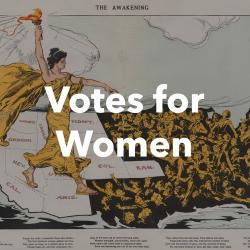
Votes for Women: A Portrait of Persistence
<p>Take a close look at the portraits and objects within “Votes for Women: A Portrait of Persistence” exhibition at the National Portrait Gallery. “Votes for Women” outlines the more than 80-year movement for women to obtain the right to vote as part of the larger struggle for equality that continued through the 1965 Civil Rights Act and arguably lingers today. This Learning Module highlights figures such as Lucy Stone and Alice Paul, but also sheds light on the racial struggles of the suffrage movement and how African American women, often excluded by white women from the main suffrage organizations, organized for citizenship rights (including the right to vote).</p>
<p>#NPGteach</p>
<p>#BecauseOfHerStory</p>
Nicole Vance Nash
47
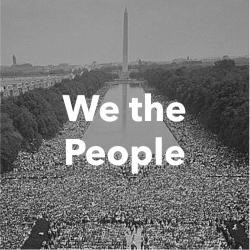
We the People: Who are We as an American People?
<p>We the People: Who are We as an American People? explores the ways in which artists and sitters use portraiture as a means to convey American history and identity. Students will learn about American geography, culture, civilization, symbols, and the Civil War through the faces of the people who have shaped the United States of America.</p>
<p>#NPGteach</p>
Nicole Vance Nash
97
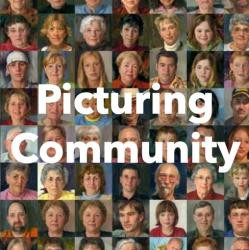
Picturing Community
<p>How do we define community today? Through social media our connections with family, friends and acquaintances are increasingly widespread. And yet we are still drawn to the idea of small communities and the face-to-face interactions they promote. The artists represented in this learning lab module explore this concept through a series of related portraits of families, friends, neighbors, and various identity groups.</p>
<p>After completing this learning lab module, students will be better able to:</p>
<ul><li>Identify and analyze key components of a portrait</li>
<li>Explore the definition of “community” and its relevance in their own lives.</li></ul><p>#NPGteach</p>
<p></p>
Nicole Vance Nash
55
Portraying Global Citizenship
<p>Students will analyze portraiture as it relates to global citizenship. Students will identify specific situations where human or cultural factors are involved in global conflict and identify different viewpoints in the struggle and will recognize the cultural contributions of various ethnic groups in the United States to the world.</p>
<p>This learning lab module addresses the following questions through portrait conversations:</p>
<ul><li>What is the role of the US in the world?</li><li>What does it mean to be a global citizen?</li><li>What are some ways that historical figures participated as an active member of the global community?</li><li>What choices did historical figures make that positively impacted you, others, or the environment?</li><li>What choices did historical figures make that negatively impacted you, others, or the environment? </li><li>Is the United States a melting pot or a salad bowl?</li></ul><p>#NPGteach</p>
<p><br /></p>
Nicole Vance Nash
74
Power and Portraiture
<p>Power and Portraiture highlights the ways in which artists and sitters use portraiture as a means to convey power. By analyzing portraiture, students will consider how power is visualized, gained, used, justified, and revoked. Students will explore the powerful contributions to the history and culture of the United States through portraits of the following individuals:</p>
<ul><li>Rosa Parks</li><li>Belva Lockwood</li><li>Eunice Kennedy Shriver </li><li>LL Cool J</li><li>Henrietta Lacks</li><li>An Unidentified Enslaved Woman</li></ul><p><strong>Objectives:</strong> After completing this lesson, students will be better able to: </p>
<ul><li>Examine how modern and contemporary artists use portraiture to reveal aspects of a sitter’s individual, community/cultural, and national identity. </li><li>Identify key components of a portrait and discuss what one can learn about the sitter through these components. </li><li>Discuss the artistic choices that portrait artists make and consider how such decisions can reveal the artists’ viewpoints and also influence the viewers’ understanding of the sitters’ identity. </li><li>Use the museum’s collection as a gateway to investigating and exploring of the visualization of power.</li></ul><p><strong>Keywords</strong></p>
<p>Portraiture, Power, Rosa Parks, Civil Rights, Social Justice, Belva Lockwood, Women's Suffrage, Eunice Kennedy Shriver, Disabilities, Special Olympics, LL Cool J, Rap Music, Henrietta Lacks, STEAM, Enslavement, Sally Hemings, #NPGteach</p>
Nicole Vance Nash
52
Facing the Past, Present, and Future through Portraiture
<p>The Learning Lab Collection highlights the ways in which portraiture reveals the past, present, and future of artist, sitters, and the nation. By analyzing portraiture, students will consider how portraiture reflects the past, mirrors the present, and inspires the future. Students will explore a variety of mediums, sitters, and eras of the United States through portraiture of the following individuals:</p>
<ul><li>Faith Ringgold</li><li>Fred T. Korematsu</li><li>Leonora O'Reilly</li><li>Fisk Jubilee Singers</li></ul><p><strong>Objectives:</strong> After completing this lesson, students will be better able to: <br /></p>
<ul><li>Examine how modern and contemporary artists use portraiture to reveal aspects of a sitter’s individual, community/cultural, and national identity. </li><li>Identify key components of a portrait and discuss what one can learn about the sitter through these components. </li><li>Discuss the artistic choices that portrait artists make and consider how such decisions can reveal the artists’ viewpoints and also influence the viewers’ understanding of the sitters’ identity. </li><li>Use the museum’s collection as a gateway to investigating and exploring of the visualization of past, present, and future</li></ul><p><strong>Keywords: </strong>Faith Ringgold, Fred T. Korematsu, Leonora O'Reilly, Fisk Jubilee Singers, Self-Portrait, Textile Art, Story Quilt, Activism, Japanese Incarceration, Topaz, Korematsu v. United States, Suffrage, Wallace Morgan, Newspaper Sketch, Triangle Shirtwaist Factory Fire, Music, Choir, Photography, Cabinet Card, Past, Present, Future</p>
<p>#NPGteach<br /></p>
Nicole Vance Nash
56
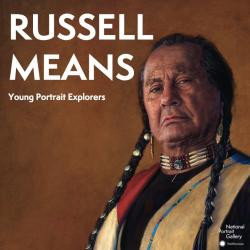
Russell Means: Young Portrait Explorers
<p>Learn about Russell Means, who was a writer and an activist (a leader who fights for fairness and equality for everyone). Then share something with us about your culture or community!</p>
<p>#NPGteach</p>
<p><strong>Keywords:</strong> Russell Means, Activist, Activism, AIM, American Indian, Native American, Dakota, Sioux, North Dakota</p>
Nicole Vance Nash
24
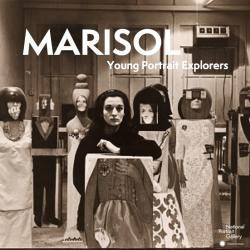
Marisol Escobar: Young Portrait Explorers
<p>Discover how fun and funky portraiture can be through the artwork of Marisol Escobar, also known as Marisol.</p>
<p>#NPGteach</p>
<p>Keywords: Marisol Escobar, Assemblage, Sculpture, Found Objects, Pop Art, New Realism, Portraiture, Venezuelan-American, Latinx Artists, Women Artists, </p>
Nicole Vance Nash
30
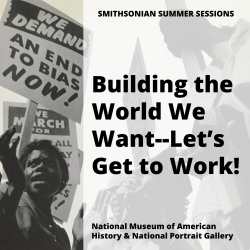
Building the World We Want--Let's Get to Work! (Smithsonian Summer Sessions)
<p>How do you invite participation in a democracy? What powerful objects can spark civic inquiry? This collection gathers resources and pedagogical approaches to support the 2021 <em>Smithsonian Summer Sessions</em> workshop, “Building the World We Want--Let's Get to Work!,” exploring techniques to invite close looking and participation in democracy.</p>
<p>Workshop facilitated by <a href="https://learninglab.si.edu/collections/culturally-reflective-teaching-in-the-museum-smithsonian-summer-sessions/ypNU2i7KANduieyD#r/">Abby Pfisterer</a> (National Museum of American History) and <a href="https://learninglab.si.edu/org/npg">Briana Zavadil White</a> (National Portrait Gallery).</p>
<p>#SummerSessions #NPGteach #NMAHteach</p>
Nicole Vance Nash
47
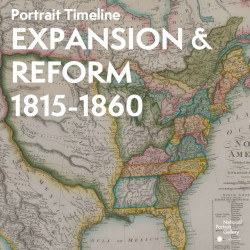
Expansion and Reform (1815-1860) with the National Portrait Gallery
<p>This portrait timeline spotlights portraits of individuals who shaped the history, development, and culture of what is now the United States of America between the years 1815 and 1860.</p>
<p>#NPGteach</p>
<p>Keywords: Expansion, Westward Expansion, War of 1812, Missouri Compromise, Monroe Doctrine, Indian Removal Act, Texas Revolution, Trail of Tears, Mexican American War, Compromise of 1850, Kansas Nebraska Act, "Bleeding Kansas," Reform, Abolitionists, Enslavement, Anti-Slavery, Women's Suffrage, Women's Rights, Kingdom of Hawaii, Osage, Cherokee, Seminole</p>
Nicole Vance Nash
68
Open Studio with the National Portrait Gallery
<p>The National Portrait Gallery is bringing its weekly art workshops to your home via YouTube! Each Friday, we will post a video with a new activity or technique. Grab a family member or your roommates, or make a virtual date with a friend, and get creative with artist Jill Galloway. Artists of all ages and skill levels will enjoy creating art inspired by the National Portrait Gallery’s collection.</p>
<p>Join us for new videos Fridays at 11:00am EST on <a href="https://www.youtube.com/smithsoniannpg" target="_blank" data-saferedirecturl="https://www.google.com/url?q=https://www.youtube.com/smithsoniannpg&source=gmail&ust=1605886355234000&usg=AOvVaw01p62fkn0GK_K4Vt581Wsl">YouTube@smithsoniannpg</a></p>
<p>#NPGteach</p>
<p>Keywords: Studio Art, Painting, Collage, Drawing, Mixed Media, Portraits, Figure Drawing, Art Instruction, Guided Art Activities, Sculpture, </p><p><br></p>
Nicole Vance Nash
287
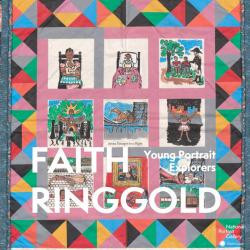
Faith Ringgold: Young Portrait Explorers
<p>Learn about how Faith Ringgold uses quilts to tell stories.</p>
<p>#NPGteach</p>
<p><strong>Keywords:</strong> Faith Ringgold, story quilts, self-portrait, textile, fabric, quilt, African-American artist</p>
Nicole Vance Nash
27
Collisions in Portraiture
<p>Collisions in Portraiture highlights the ways in which artists and sitters use portraiture to reveal what happens when cultures collide. By analyzing portraiture, students will consider how cultural collisions are visualized from the nineteenth to twenty-first centuries. Students will explore the powerful contributions to the history and culture of the United States through portraiture.</p>
<p><strong>Objectives:</strong> After completing this lesson, students will be better able to: </p>
<ul><li>Examine how modern and contemporary artists use portraiture to reveal aspects of a sitter’s individual, community/cultural, and national identity. </li><li>Identify key components of a portrait and discuss what one can learn about the sitter through these components. </li><li>Discuss the artistic choices that portrait artists make and consider how such decisions can reveal the artists’ viewpoints and also influence the viewers’ understanding of the sitters’ identity. </li><li>Use the museum’s collection as a gateway to investigating and exploring of the visualization of colliding cultures.</li></ul><p>#NPGteach</p>
<p><strong>Keywords</strong></p>
<p>Portraiture, Collisions, Harriet Tubman, Civil War, Stonewall, Roger Shimomura, Chief Joseph, Robert Rauschenberg, United Farm Workers</p>
Nicole Vance Nash
44

Faith Ringgold: Jóvenes exploradores de retratos
<p>Aprender sobre cómo Faith Ringgold usa <em>quilts</em> (edredones de retazos) para contar historias.<br></p>
<p>#NPGteach</p>
<p>La traducción de este recurso fue posible gracias al generoso patrocinio de Bank of America.</p>
<p><br></p>
Nicole Vance Nash
28
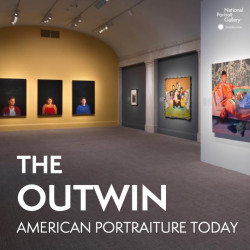
Outwin 2019: American Portraiture Today
<p>Explore portraits from <em>The Outwin 2019: American Portraiture Today </em>at the National Portrait Gallery in this Learning Lab collection.</p>
<p><em>The Outwin 2019: American Portraiture Today</em> presents nearly 50 portraits that were selected through an open call that garnered more than 2,600 entries from artists working across the United States and Puerto Rico. For the first time in the triennial’s history, the museum specifically asked that submissions respond “to the current political and social context,” and this resulting presentation offers perspectives on some of today’s most pressing issues.</p>
<p>The selected finalists create portraits in a wide range of media—painting, drawing, photography, sculpture, time-based media art, installation, and performance—but all are keenly aware of portraiture’s potential to insist on the presence, and importance, of every human being. 2019's Outwin aims to advance the art of portraiture for future generations while encouraging visitors to empathize and locate meaningful connections.</p>
<p>Every three years, the National Portrait Gallery invites both emerging and established artists working in the U.S. to submit a recent portrait to the Outwin Boochever Portrait Competition. Around fifty works are then selected by expert jurors who, on average, review more than 2,500 entries. The competition has evolved since its inception in 2006 to include performance art and time-based media alongside painting, photography, drawing, and sculpture.</p>
<p>As part of its deep commitment to supporting contemporary artists working in portraiture, the National Portrait Gallery looks to the Outwin to share the genre’s remarkable relevance and strengthen the visual representation of American history. Each iteration of the competition gauges portraiture’s progression while underscoring the potential of one person to make an impact.</p>
<p>The Outwin is made possible through the Virginia Outwin Boochever Portrait Competition Endowment, established by Virginia Outwin Boochever (1920–2005), who served as a docent for the National Portrait Gallery for nearly two decades. Mrs. Boochever’s vision for the Outwin is now carried out by her children.</p>
<p>Educators, to explore these portraits with your students through close looking and visible thinking routines, see the resources at the end of this collection for ideas.</p>
<p>#NPGteach</p>
Nicole Vance Nash
68
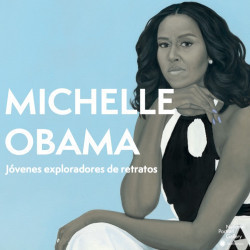
Michelle Obama: Jóvenes exploradores de retratos
<p>Aprender sobre cómo la primera dama Michelle Obama ayudó a su comunidad (grupo de personas que viven juntas o comparten algo en común). Y luego diseñar un autorretrato en el que muestres cómo tú ayudas a tu comunidad<br></p>
<p>#NPGteach </p>
<p>La traducción de este recurso fue posible gracias al generoso patrocinio de Bank of America.</p>
Nicole Vance Nash
29
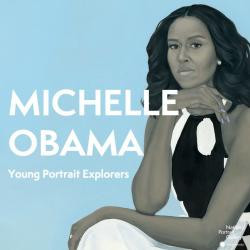
Michelle Obama: Young Portrait Explorers
<p>Learn how First Lady Michelle Obama helped her community. Then design a self-portrait that shows how you help your community.</p>
<p></p>
<p>#NPGteach #NPGype #MichelleObama</p>
Nicole Vance Nash
30