
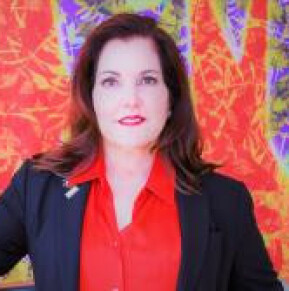
mirmac16
- As Interim Director, overseeing the operations of the museum to ensure we support its mission and vision to articulate and maintain the museum’s mission, values, and goals, ensuring they align with the needs of the community and the museum's stakeholders.
- Develop a Strategic Plan to support long-term planning for exhibitions, collections, education, and outreach programs. Collaborate with the board of trustees and senior staff to set goals for the museum’s future and also represent the museum to the public, partners, and donors. Work closely with the board of trustees, providing them with regular updates on the museum’s operations, financial status, and strategic initiatives. They may also assist in the recruitment and development of board members.
- Ensuring that the museum operates smoothly on a day-to-day basis, overseeing staff, exhibits, programming, and visitor services. Overseeing the maintenance and preservation of the museum’s physical space, including galleries, storage areas, and educational facilities. Ensuring that the museum complies with local regulations regarding safety, accessibility, and environmental standards.
- Manage the museum’s budget, including securing funding, making decisions about resource allocation, and ensuring financial health and sustainability. Lead fundraising initiatives, including writing grants, cultivating relationships with major donors, and planning fundraising events.
- Hire key personnel and oversee the management and development of museum staff across departments (curatorial, education, marketing, collections care, etc.). Support ongoing professional development for museum staff, encouraging training and growth within the museum field. Ensure the museum is governed by sound policies that guide all aspects of its operation, from collection care to employee conduct.
- Oversee the curatorial decisions, including exhibition planning, collection acquisitions, deaccessioning, and conservation practices. Ensure the museum secures major acquisitions and that deaccessioning processes comply with ethical standards. and that the museum's adherence to legal and ethical guidelines related to the handling of cultural property. Motivate and guide the museum's staff and encourage collaboration across departments.
- Manage the institution’s public image, handle media relations, and advocate for the museum in the public sphere. Build relationships with local governments, educational institutions, other cultural organizations, and the broader community. Advocate for the museum's role in cultural and educational life.
- Develop educational programs, partnerships with schools, and community initiatives that align with the museum’s mission and reach diverse audiences. Promote diversity, equity, and inclusion in the museum’s programs, collections, and staffing. This may involve reviewing existing practices and policies to ensure the museum is accessible and welcoming to all audiences.
- Facilitate and support academic research related to the museum’s collection. Collaborate with scholars, other universities, and/or other cultural institutions to foster new knowledge and contribute to the field. Oversee and contribute to scholarly publications, exhibition catalogs, and other materials related to the museum’s collections and activities
- As the former, Director of Education, I have pioneered several innovative programs such as Artful Playdates for Early Childhood, Drawing Salons, and Maker-space workshops to an arts integration program titled STEAMworks for Title 1 schools
- As a university campus museum ensure the museum caters to all university students working closely with faculty to align course curriculum with exhibitions on view.
Miriam Machado, Interim Director
Frost Art Museum at Florida International University, Miami, Florida
Harvard University Certificate, Visual Thinking Strategies
MA Johns Hopkins University, Museum Studies
BA, Florida International University, Art History, Fine Arts
ADA Coordinator for programs and institution
mirmac16's collections
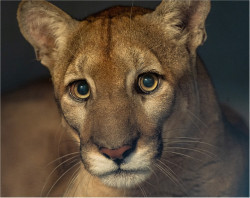
Path of the Panther
<p>This collection focuses on the "Path of the Panther" exhibition at the Patricia & Phillip Frost Art Museum FIU, a photographic chronicle by National Geographic Explorer Carlton Ward Jr, showcasing his six-year journey documenting the Florida panther's survival and its relationship with the Florida Wildlife Corridor. The exhibition highlights the panther's resilience and the need for preserving its habitat.</p>
<figure><img src="/public/images/large/editor/10129525/PathofthePantherTeacherResourcePacket.jpg" data-image="10129525"></figure>
mirmac16
17
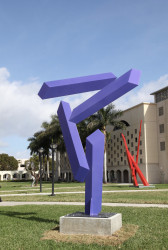
Sculpture Park at the Frost Art Museum
<p>This collection focuses on the monumental sculpture collection at the Frost Art Museum in Miami, Florida.</p>
<figure><img src="/public/images/large/editor/9997337/image1.jpg" data-image="9997337"></figure>
mirmac16
21
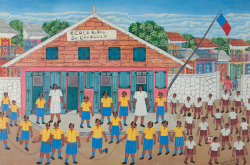
Exploring Cultural Disparity with Artist, Morel Doucet
<p>This collection explores the multidisciplinary artwork of Artist, Morel Doucet. </p>
mirmac16
8
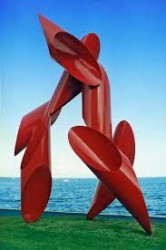
Alexander Liberman
<p>This collection focuses on the monumental sculptures of Russian artist, Alexander Liberman.</p>
<figure></figure>
mirmac16
9
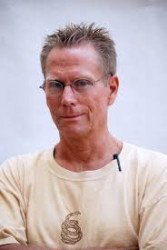
Book Art with Artist Tom Virgin
<p>Tom Virgin was born and raised in the Midwest (Detroit) and eventually transplanted to South Florida where he fell in love with Miami, specifically Coconut Grove. </p>
<p>His work spans a range of media from prints and book arts, to sculpture and public works. Two degrees in printmaking, over a decade of residencies in artist’s communities/National Parks, and a parallel career teaching art in Title I Public High Schools for over 20 years have nurtured a desire to make his work accessible to a broad range of people, and supportive of the communities the is a part of. He participates annually in the Miami Book Fair and currently has a studio in Little Haiti, Extra Virgin Press. </p>
<figure><img src="/public/images/large/editor/9978960/Virgin.jpg" data-image="9978960"></figure>
<p>Virgin's work can be found in public places across the country.</p>
mirmac16
8
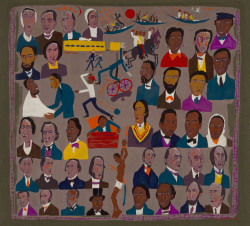
Fighters for Freedom, William H. Johnson
<p>This collection focuses on the Smithsonian-curated exhibition Fighters for Freedom by artist William H. Johnson. </p>
<figure><img src="/public/images/large/editor/9928312/WilliamH.JohnsonTeacherResourcePacket.jpg" data-image="9928312"></figure>
<p></p>
mirmac16
15
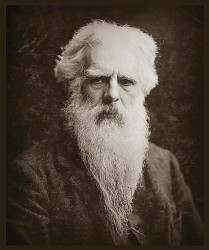
Eadweard Muybridge: The Father of the Motion Picture
<figure><img src="/public/images/large/editor/9884158/image6.jpg" data-image="9884158"></figure>
mirmac16
10
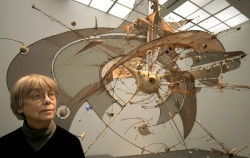
Lee Bontecou Space Never Stops
<p>This collection focuses on Lee Bontecou's sculptural artwork related to space. Bonetecou trained in academic painting but later turned her attention to sculpture. She studied under <a href="https://en.wikipedia.org/wiki/William_Zorach" target="_blank" draggable="false" rel="noopener">William Zorach</a>, whose abstract figurative sculptures were an early compositional influence. She spent the summer of 1954 at the Skowhegan School in Maine, where she learned welding and afterward began to incorporate it into her figurative sculptures. The intricately constructed black holes, or voids, in Lee Bontecou's most famous pieces don't seem to belong to any type of art previously produced - painting or sculpture. These voids seem to connect to ulterior dimensions.</p>
<figure><img src="/public/images/large/editor/9884142/LeeBontecouTeacherResourcePacket.jpg" data-image="9884142"></figure>
mirmac16
6
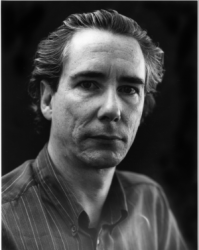
Mike Kelley
<p>This collection focuses on Mike Kelley's work. It includes found objects, textile banners, drawings, assemblages, collages, performances, and videos. Kelley often collaborated with artist Paul McCarthy and produced projects.</p>
<p></p>
<figure><img src="/public/images/large/editor/9882575/image5.png" data-image="9882575"></figure>
mirmac16
13
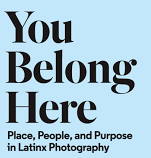
Selfies - You Belong Here: Place, People, and Purpose
<figure><img src="/public/images/large/editor/9882031/YouBelongHere.jpg" data-image="9882031"></figure>
<p><strong>This collection focuses on the exhibition <em>You Belong Here: Place, People, and Purpose</em></strong> in Latinx Photography which celebrates the dynamic photography of Latinx artists across the United States. The exhibition brings together established and emerging artists, who tackle themes of political resistance, family and community, fashion and culture, and the complexity of identity in American life.</p>
mirmac16
14
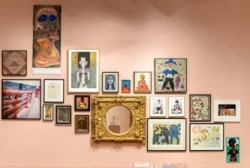
Tesoro Pepe Mar's A Love Letter to the Frost
<p><br>This collection presents <strong><em>Tesoro: Pepe Mar’s Love Letter to the Frost</em></strong>. The exhibition is organized visually across thematic chapters such as Theatre of the City; Mirror, Mirror; Procession; and Cabinet of Curiosities, Tesoro’s highlights including masks, ceramics, and paintings by René Portocarrero, Thornton Dial, and Purvis Young, alongside select loans.</p>
mirmac16
14
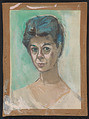
Addie Herder: Machines for Living
<p>This collection celebrates the dynamic small-scale abstractions of Addie Herder (1920–2009). Known for her collages, Herder’s imaginative compositions often function in between two- and three-dimensional spaces. Often through careful manipulation of found paper, the artist re-imagined form and meaning in her own intricately crafted vignettes. Herder’s rigorous yet delicate assemblage works recall the works of artists Louise Nevelson (1899–1988) and Joseph Cornell (1903–1972).</p>
<figure><img src="/public/images/large/editor/9879368/Addie.jpg" data-image="9879368"></figure>
<p></p>
mirmac16
5
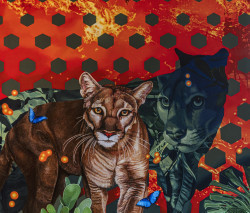
The Golden Lining, Environmental Mural
<p>This collection features the environmental mural, <em>The Golden Lining</em>, at the Patricia and Philip Frost Museum, which features the Florida Panther, the university's mascot.</p>
<p>Murals, or wall paintings, are one of the oldest forms of visual art known to humans. Murals create conversations and expand the thoughts of viewers whether they are in public or private spaces. Murals can create dialogue related to a specific genre, subject, or community activism issue. </p>
<p>Murals date back to 30,000 B.C. dating to Paleolithic times. Throughout time, humans painted images on the walls of caves and other natural surfaces. More recently murals were a popular art form throughout the Roman Empire and in Renaissance Italy. A revival of mural painting took place between the 1920s and the 1940s when artists in Europe and the Americans explored modern possibilities for this ancient art form. France, Mexico, and the United States emerged as particular centers for innovative mural painting. These murals range from Cave Art, Lascaux, Chauvet Cave in France, Murals of Pompeii in Italy, and the Murals in Egyptian tombs. </p>
<p>Murals are typically installed in public areas, so they are easily accessible and visible. In some cases, artists will share stories about a place or space through an artistic mural to celebrate history, community, and celebrations. Many cities provide spaces on buildings as part of Art in Public Places to create murals that will attract new businesses, and locals and serve to boost the economy of an area, town, or city. </p>
<figure><img src="/public/images/large/editor/9881929/DSC07568.jpg" data-image="9881929"></figure>
<p>Throughout history, many mural techniques have been used by artists. These techniques are, but are not limited to the following: ceramics, fresco painting, oils on large canvases, tempera/ acrylic painting. Murals can be created through a variety of techniques such as: antiquing, glazing, fresco, painting, sponging, stenciling, or stippling. In recent years, contemporary murals have spanned from painting to mosaic, encaustic, stained glass, and even photography. </p>
mirmac16
13
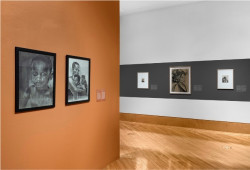
Rembrandt Reframed
<figure><img src="/public/images/large/editor/9829627/Picture1.jpg" data-image="9829627"></figure>
<p>This exhibition presents 22 prints by Dutch artist Rembrandt van Rijn (b. Leiden, 1609–d. Amsterdam, 1699) from the collection of the Georgia Museum of Art. This exhibition brings together the work of three contemporary artists with distinctly different practices. Reframed in the context of Rembrandt’s prints Charles Humes, Jr., Jennifer Printz, and Wanda Raimundi-Ortiz challenge us to consider the ways in which they share approaches but also depart dramatically in technique and concept from the Old Master. </p>
mirmac16
14
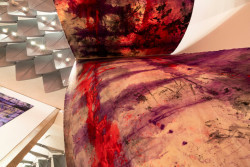
Oh what surrounds me
<p>Of what surrounds me presents three artists whose creative process is profoundly influenced by nature, serving as both a significant element in their work and a conduit for exploring self and others. Taking its title from the poem by Mary Oliver (1935–2019) of the same name, this exhibition positions each artist as instigators of close contemplation. Looking to their surroundings, Amanda Bradley, Cristina Lei Rodriguez and Mette Tommerup think of the natural world as both an immersive state and a vehicle for making meaning.</p>
mirmac16
17
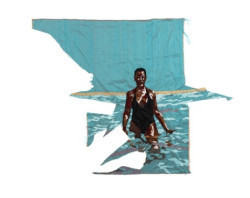
Billie Zangewa Field of Dreams
<p>This Teacher Resource Packet provides an overview of South African artist Billie Zangewa. Zangewa's works in silk and recently exhibited her most recent work in the exhibition Field of Dreams at Site Santa Fe and Frost Art Museum.</p>
mirmac16
12
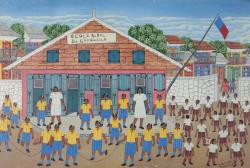
Teaching with Haitian Art and Heritage with Frost Collection
<p>Understanding Haitian Culture though Art <br /></p>
<p>This lesson will support teaching Haitian traditions and culture through the Frost Art Museum collections. It will also provide a look into cultural identity, Haitianite supported by research conducted by two FIU faculty members . The PowerPoint will expand on Haitian history and the notes will add talking points. The Miami Dade County Public School lessons support various investigations from the past to the present. <br /></p><p>Connections to the Polish Black Virgin demonstrate the spread of culture and religious beliefs that traveled as countries were conquered. <br /></p>
mirmac16
24
19th and 20th Century Voting Rights in the United States
<p>This Learning Lab collection was created by Holly Kuhn, a student in the summer 2021 Smithsonian Affiliate Digital Learning and Engagement Internship, in partnership with the Emerson Collective and the Patricia and Phillip Frost Art Museum, a Smithsonian Affiliate. #SAintern #RaceAndSocialJustice #WomensHistory</p>
mirmac16
20
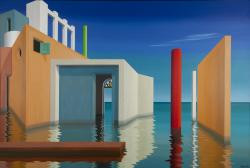
Latin American Artists
<p>Latin American works from the Permanent Collection at The Patricia & Phillip Frost Art Museum at Florida International University. The works represent a timeline that spans thousands of years from pre colombian to present day.</p><p>#LatinoHAC<br /></p>
mirmac16
28
Women's History As Seen Through Art
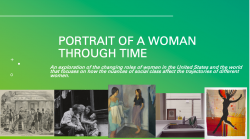
<p>This collection is an exploration of the changing roles of women in the US and the world as seen through artworks in the Frost Art Museum in Miami Florida. </p>
<p>It aims to understand the different roles women have inhabited in US history by contextualizing and analyzing different artworks in the Frost Art Museum’s collections. </p>
<p>It will display the different roles women have inhabited in U.S history through an analysis of a diverse collection of the Frost Museum and Smithsonian artworks. It hopes to understand the ways in which depictions of women and their roles have changed with time, culture, and specific artists. </p>
<p>The collection makes clear that while there is a general arch of progress in terms of female agency and opportunity, social class (in the form of racial and financial inequality) impact the stages at which progress took place for different groups of women. </p>
<p>By using art to examine history and historical change, this collection aims to be a useful combination of art history, including artistic analysis, and history, including contextualization and narrative. </p>
<p>Keywords: History, Women, photography, visual art, gender roles, Haiti </p>
mirmac16
28