
Ashley Naranjo
Education and Outreach Strategist
Smithsonian Institution
 Smithsonian Staff
Ashley Naranjo, M.Ed. is a museum educator, specializing in the use of digital resources for teaching and learning. She currently manages distance learning initiatives and education partnerships for the Smithsonian. Portfolio highlights have included: the Smithsonian Quests digital badging program, Smithsonian Online Education Conferences, Smithsonian Learning Lab nationwide teacher professional development, Teachers of the Year programming at the Smithsonian, “Explore with Smithsonian Experts” video series, and Smithsonian print publication guides.
Before coming to the Smithsonian, she has had experiences in education in both formal and informal learning spaces: as an ESOL instructor for adults, a middle school teacher in the humanities and a summer programs administrator. She holds a B.A. in Human Development (Developmental Psychology) from the Lynch School of Education at Boston College, where she was a research assistant and independent study student in the Laboratory of Thinking, Learning & Cognition in the Arts. She completed a M.Ed. in Learning Design and Technology from the Rossier School of Education at the University of Southern California, with a thesis entitled, “Using Digital Museum Resources in the Classroom”. She is a 2019 graduate of the Getty Leadership Institute’s NextGen of Museum Leaders program.
Ashley Naranjo's collections

Analysis of an Artwork by Maya Lin
<p>Chinese American designer and artist Maya Lin (b. 1959) achieved national recognition as a Yale University undergraduate student when her design for the Vietnam Veterans Memorial won a national competition. </p>
<p>In this activity, students will analyze a unique artwork-filled room designed by Maya Lin, first using only a still visual with little context, then a hyperlapse video of the artwork's installation, then the artist herself discussing her process, materials used, and vision. Students will make predictions based on visuals, gradually learn about the context of the artwork, and reflect on how their perception of the artwork changed with the addition of new information.
</p>
<p>This activity can be used as an entry point into studying Maya Lin's artwork and other artworks inspired by experiences with the natural environment. This activity opens with a Project Zero See-Think-Wonder routine and asks learners to look closely, prior to revealing additional contextual information.
To learn more about other Asian Pacific American Artists, visit this collection: <a href="https://learninglab.si.edu/collections/asian-pacific-american-artists/bW68eE1p6kHVzsC7#r" target="_blank" style="background-color:rgb(63,63,63);">https://learninglab.si.edu/collections/asian-pacific-american-artists/bW68eE1p6kHVzsC7#r</a></p>
<p><em>This Smithsonian Learning Lab collection received Federal support from the Asian Pacific American Initiatives Pool, administered by the Smithsonian Asian Pacific American Center.</em></p>
<p>Keywords: Chesapeake Bay, Maya Lin, Asian American, marbles, Renwick Gallery, waterways</p>
<p>#APA2018 #BecauseOfHerStory</p>
Ashley Naranjo
13
Pecha Kucha Talks: Ethnic Studies
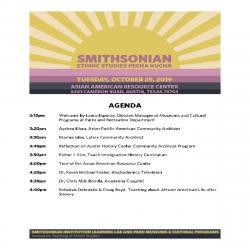
<p><em>Pecha Kucha </em>is a storytelling format for sharing information in a fast-paced setting (Japanese for "chit-chat"). In preparation for the City of Austin Parks and Recreation Department's workshop on the <a href="https://learninglab.si.edu/collections/digital-museum-resources-for-the-high-school-ethnic-studies-classroom-city-of-austin-parks-recreation/44WqBJtvMHyVXzFB" target="_blank"><em>Innovative Teaching of Ethnic Studies</em></a><em> </em>(Oct 30, 2019), educators, archivists, and researchers convened to learn more about relevant digital resources available for curriculum creation in Ethnic Studies coursework. </p>
<p>The Oct 29, 2019 program included an Asian American community archivist at the Austin History Center; a Social Studies educator at the University of Texas, Austin; a professor and media producer in sharing relevant talks by African American scholars; a Mexican American Studies professional development coordinator; and an archaeologist and historian team combining oral histories with artifacts found in a recent dig. </p>
<p>This thematic collection includes digitally-accessible resources that highlight the content shared by these experts. </p>
<p>#EthnicStudies</p>
Ashley Naranjo
10
Portrait Analysis: Norman Mineta
<p>In this activity, students will analyze a portrait of Norman Mineta (b. 1931), a U.S. politician and the first Asian American to hold a post in the presidential cabinet, serving as Secretary of Transportation and Secretary of Commerce under President George W. Bush. The son of Japanese immigrants, Mineta and his family were incarcerated in the Heart Mountain camp in Wyoming under Executive Order 9066 during World War II.
</p>
<p>This activity can be used to build students vocabulary in discussing visual elements of a portrait or as an entry point for studying Norman Mineta's life and achievements, U.S. history, and more. Questions from the National Portrait Gallery's<em> "Reading" Portraiture Guide for Educators</em> and a Project Zero See-Think-Wonder routine guide the student inquiry. The complete guide and instructions are located at the end of the collection. To learn more about other Asian Pacific American activists and leaders, visit this collection: <a href="https://learninglab.si.edu/collections/asian-pacific-american-activists-and-leaders/MR1jszd7YDA7gujx#r" target="_blank">https://learninglab.si.edu/collections/asian-pacific-american-activists-and-leaders/MR1jszd7YDA7gujx#r</a></p>
<p><em>This Smithsonian Learning Lab collection received Federal support from the Asian Pacific American Initiatives Pool, administered by the Smithsonian Asian Pacific American Center.</em><span></span>
</p>
<p>Keywords: internment; Japanese American; Nisei; San Jose, California
</p>
<p>#APA2018 #EthnicStudies<br /></p>
Ashley Naranjo
10
Understanding Intersectionality
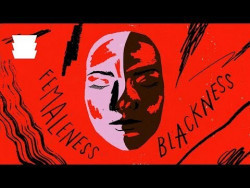
<p>This topical collection includes videos and articles to support teachers in learning and teaching about the concept of <em>intersectionality</em> and being more mindful of <em>intersectionality</em> in their own teaching. As defined by Teaching Tolerance, <em>Intersectionality</em> refers to the social, economic and political ways in which identity-based systems of oppression and privilege connect, overlap, and influence one another. </p>
<p>This collection begins with a video from the National Museum of African American History and Culture that serves as a primer on the subject and also includes a TED Talk by Kimberlé Crenshaw, Washington Post articles on the subject, a Teaching Tolerance magazine article, and Crenshaw's 1989 research article, "Demarginalizing the Intersection of Race and Sex: A Black Feminist Critique of Antidiscrimination Doctrine, Feminist Theory and Antiracist Politics." Teachers and students may use this collection as a springboard for classroom discussions.</p>
<p>#APA2018 #EthnicStudies</p>
Ashley Naranjo
7
Student Activity: Music as an Environmental Advocacy Approach
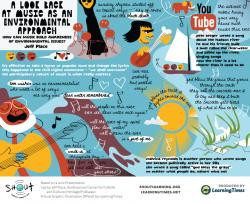
<p>In this student activity, explore five musical artists and their connections to environmental advocacy as shared by a Smithsonian Folkways archivist. Inspired by these songs about water issues, you will write lyrics for a song on an environmental theme, incorporating relevant words and imagery.</p><p>#SmithsonianMusic<br /></p>
Ashley Naranjo
9
Comparing Musical Arrangements and Interpretations of "The Star Spangled Banner"
<p>This collection about the National Anthem of the United States includes more than 10 performances of it, the story of Francis Scott Key’s inspiration and the British tune to which he set his lyrics. The suggested instructional strategy is a comparison/contrast exercise, with "Close Listening" questions.</p>
<p>This collection was created for the District of Columbia Public Schools (DCPS) Arts Professional Development Day. #SmithsonianMusic</p>
Ashley Naranjo
18
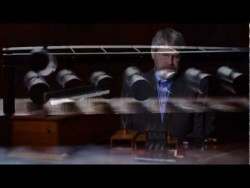
Scientific Instrument Collection: Exploring Acoustics
<p>This collection includes videos demonstrating key principles of the science of sound, using some of the Smithsonian's scientific instrument collection. These videos are paired with the Visible Thinking Routine, "What's going on? What do you see (or hear) that makes you say that?" as a way to check for understanding. Learners can select one or more of the videos to watch and then provide their interpretation of what's happening and support it with a justification from the video. Learners can also explore additional short experiments, under the heading "Additional Resources" to further understand these principles in action. #SmithsonianMusic</p>
Ashley Naranjo
21
Jazz Resources for Preschool Students
<p>Resources to support two year olds learning about jazz music and musicians. Includes portraits of Louis Armstrong, Duke Ellington, Billie Holiday, Ella Fitzgerald and Miles Davis. Students connect the musician to their instrument, identify the parts of a trumpet and listen to Louis Armstrong's "What a Wonderful World" to identify specific instruments in the song. Smithsonian Early Enrichment Center's blog includes an interview with the teacher who originally created and implemented the lesson. Included here are supporting resources of the elements mentioned in her interview.</p><p>#SmithsonianMusic<br /></p>
Ashley Naranjo
13
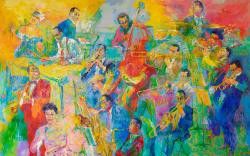
Teaching Resources: Jazz Music
<p>This teaching collection includes a variety of resources to complement a study of Jazz compositions and performers. Through these lesson plans, sheet music, artworks, and video performances, teachers can introduce the musical evolution of jazz styles and contributions of key performers. Teachers might also introduce musical techniques involved in the creation and performance of jazz.<br /><br /><br />This collection was created for the District of Columbia Public Schools (DCPS) Arts Professional Development Day.</p><p>#SmithsonianMusic<br /></p>
Ashley Naranjo
36
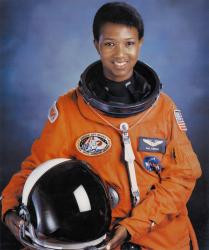
Scientists, Inventors, and Entrepreneurs: Women Who Shaped History
<p>This topical collection includes resources related to featured women scientists, inventors and entrepreneurs. This collection includes portraits of the scientists, inventors and entrepreneurs, related artifacts, articles, videos with experts, and related Smithsonian Learning Lab collections. Use this collection to launch lessons about the women's life stories, primary source analysis, and examination of the context in which these women lived and made their contributions. This collection is not comprehensive but rather provides a launching point for research and study. <br /></p>
<p>Keywords: Mae Carol Jemison, Grace Hopper, Ellena Ocha, Maria Sibylla Merian, Madam CJ Walker, Charlotta Bass, Dr. Nancy Grace Roman, Ursula Marvin, Valentina Tereshokova, #BecauseOfHerStory<br /></p>
Ashley Naranjo
62

Second Opinion: Forging the Future – Smithsonian Resources
<p>This is a Smithsonian Learning Lab topical collection, which contains interdisciplinary education resources, including student interactives, videos, images and blogs to complement the Smithsonian's national conversation on global climate change, highlighted on <em><a href="http://www.smithsonianmag.com/second-opinion/second-opinion-education-resources-180963599/">Second Opinion</a></em><strong>. </strong> Use this sample of the Smithsonian's many resources to introduce or augment your study of this topic and spark a conversation. </p>
Ashley Naranjo
29

Student Podcasting: Exploring the "Nature of Science" through Podcast Development [TEACHER TEMPLATE-- MAKE A COPY]
<p>[DESCRIBE YOUR STUDENTS' PODCAST TOPIC HERE; INCLUDE ANY IMAGES, NOTES OR DOCUMENTATION ABOUT THEIR PROCESS. </p>
<p>EXAMPLE (3-4 sentences): <em>Sixth grade students conducted research about our community's access to clean drinking water, electricity, and roads over the past fifty years. St</em><em>udents identified subject matter experts, refined interview questions, conducted interviews and produced the episode included here. This collection includes the completed podcast episode, alongside text and images documenting the students' research and production process.</em>]</p>
<hr /><p>This Smithsonian Learning Lab collection includes examples of student-created podcast epsidoes, in response to prompts from the <em><a href="https://learninglab.si.edu/profile/63455" target="_blank">Sidedoor for Educators</a> </em>collections. After listening to <a href="https://www.si.edu/sidedoor" target="_blank" style="background-color:rgb(63,63,63);">Sidedoor</a><em></em> podcasts to set context, gain background knowledge from Smithsonian experts, and initiate a local dialogue on the topic, students engaged in community-based scientific research to explore and collect evidence about how this topic and the content within the episode is defined locally.<br /></p>
<p>To find additional student podcast collections, search the Smithsonian Learning Lab for <a href="https://learninglab.si.edu/search?st=%23YAGSidedoor2019&st_op=and&item_type=collections">#YAGSidedoor2019</a>.</p>
Ashley Naranjo
4
How might we re-design our classroom?
<p>This collection begins with the analysis of a series of images from 19th and 20th century classroom settings. Next, learners will apply <em>Agency by Design</em> thinking routines to explore elements of their own classroom that could be re-designed. Learners will go through the design process to: </p>
<ul><li>identify the precise challenge</li><li>brainstorm a solution, and</li><li>create a prototype.</li></ul><p>This lesson introduces the design process to learners through a familiar system, the classroom. It allows for learners to collaborate in the improvement and re-design of their own learning environment, while taking into account the needs of other users of the space. </p>
<hr /><p><em>This collection was created as an example used in the "Smithsonian Learning Lab, Focus on Design" session at the New Jersey Principals and Supervisors Association (NJPSA) Arts Integration Learning Institute. </em><br /></p>
Ashley Naranjo
21
Artists, Actresses and Performers: Women Who Shaped History
<p>This topical collection includes resources related to featured women artists, actresses and performers. This collection includes portraits of the artists, actresses and performers, related artifacts, articles, videos with experts, and related Smithsonian Learning Lab collections. Use this collection to launch lessons about the women's life stories, primary source analysis, and examination of the context in which these women lived and made their contributions. This collection is not comprehensive but rather provides a launching point for research and study. <br /></p>
<p>Keywords: Hattie McDaniel, Aretha Franklin, Frida Kahlo, Anna May Wong, Selena Quintanilla, Maria Tallchief, Maya Lin, Gladys Bentley, #BecauseOfHerStory<br /></p>
Ashley Naranjo
81
Image Analysis: "Girl at Gee's Bend, Alabama" by Arthur Rothstein
<p>Developing an inquiry-based strategy to support students can allow them to investigate objects and images as historians do. In this example, students try to reveal the story behind the image. They raise questions for their own further research. Because the image has only a title, the photographer's name, the "sitter"'s name, the place and the date, students have to rely on their own analysis of evidence in the image, rather than someone else's interpretation. When they read the expert's analysis, they will have already considered many of the elements that the expert highlights and can compare their interpretations. </p><p>"Girl at Gee's Bend, Alabama" is a provocative photograph that can be used in discussions ranging from history of the South during the Great Depression, to social justice. </p>
Ashley Naranjo
3
The Invention of Thanksgiving
<p>This collection explores the evolving history of how Americans celebrate Thanksgiving. The introductory video, podcast and lesson in the collection help provide context for the complicated portrayal and depiction of what actually happened at the first Thanksgiving and how it is celebrated today.</p>
<p>The images in this collection are different portrayals of the holiday over time. They have been grouped in order of publication from 1863 to 1994. As you look through them and complete the activities, think about these three key questions:</p>
<ul><li>How does the context in which an image was produced affect the result? Meaning, how does what was happening at the time affect what kind of picture of Thanksgiving we see?</li><li>What do the images say about our national identity: who is welcome in the United States? What do we celebrate and why? Whose version of the Thanksgiving story does each image tell?</li></ul><p>This collection was adapted from Kate Harris' collection, <a href="https://learninglab.si.edu/collections/thanksgiving-a-reflection-of-a-nation/b8W1UbCW2mhRrra5" target="_blank">Thanksgiving-- A Reflection of A Nation</a> and supplemented with the National Museum of the American Indian's<em> <a href="https://nmai.si.edu/americans/#stories/queen-of-america" target="_blank">Americans</a></em> online exhibition. <br /></p>
<p><em>#historicalthinking</em></p>
<p><br /></p>
Ashley Naranjo
19
Activists: Women Who Shaped History
<p>This topical collection includes resources related to featured women activists. This collection includes portraits of the activists, related artifacts, articles, videos with experts, and related Smithsonian Learning Lab collections. Use this collection to launch lessons about the life stories of activists, primary source analysis, and examination of the context in which these women lived and made their contributions. This collection is not comprehensive but rather provides a launching point for research and study. </p>
<p>Keywords: Fannie Lou Hamer, Ida B. Wells, Ruth Bader Ginsburg, Edith Windsor, Wilma Mankiller, Grace Lee Boggs, Pauli Murray, Shirley Chisholm, Rachel Carson, Zitkala-Sa, #BecauseOfHerStory</p>
Ashley Naranjo
70
Exploring Simple Machines and the Complexities of Rube Goldberg Inventions
<p>This collection explores the concept of Rube Goldberg inventions and their use of multi-step processes to complete an action. Often Rube Goldberg inventions utilize a series of simple machines to cause a chain reaction for a task. Using an image of a comic that features one such invention, students can analyze the parts, purposes and complexities of the object and its processes. Additional resources are included to support the further exploration of these inventions and the identification of the simple machines (levers, pulleys, wedges, screws, wheels, axles and inclined planes). </p>
<p>This collection complements an in-person visit to the <em>Rube Goldberg™: The World of Hilarious Invention! Exhibit</em> at the Children's Museum of Pittsburgh.</p>
<p>#PZPGH</p>
Ashley Naranjo
15
The Four Freedoms
The "Four Freedoms" speech, as the 1941 State of the Union address came to be known, were goals outlined by President Franklin Delano Roosevelt on January 6, 1941 to Congress and the American people. He proposed four fundamental freedoms that people everywhere in the world should enjoy and described the "unprecedented" threat that Nazi domination of Europe presented to the security of the United States. This Learning Lab collection includes four Norman Rockwell paintings, alongside a portrait of Franklin Delano Roosevelt and a stamp with this iconic phrase. An audio excerpt of the speech is available via the National Archives and included here.
Ashley Naranjo
11
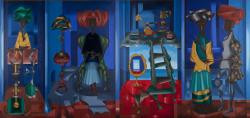
Looking Closely at Surrealist Art: Cundo Bermúdez's "Cinco Figuras"
<p>This teaching collection focuses on the surrealist artwork of Cuban artist, Cundo Bermúdez (1914-2008), entitled "Cinco Figuras" from the Patricia and Phillip Frost Art Museum's collections. By applying the Project Zero Visible Thinking Routine, "See, Think, Wonder" to the artwork, teachers can lead students in a discussion that allows them to make observations and support interpretations with details, while noting areas for further exploration. </p>
<p>Additional resources are included in this collection to help contextualize the artist, his life and other related works. </p>
<p></p>
<ul><li>For more information about Project Zero routines and to add them to your own Smithsonian Learning Lab collections, please visit <a href="https://learninglab.si.edu/collections/project-zero-thinking-routines/oWYbEjpf19oxcFUp#r" style="background-color:rgb(63,63,63);">https://learninglab.si.edu/collections/project-zero-thinking-routines/oWYbEjpf19oxcFUp#r</a></li><li>For more artwork from the Patricia and Phillip Frost Art Museum's collections, please visit <a href="https://learninglab.si.edu/collections/latin-american-artists/aEFC5NX6L38A31L5">https://learninglab.si.edu/collections/latin-american-artists/aEFC5NX6L38A31L5</a></li></ul><p></p>
<p>Keywords: surrealism, Latino, painting, symbolism, ladder, mirror, clock, five figures</p>
<p>#LatinoHAC #VisibleThinking</p>
<p><br /></p>
Ashley Naranjo
8
Snowflakes in Wilson A. Bentley's Collection
<p>This topical collection includes images from Wilson A. Bentley's snowflake photography collection, which was donated to the Smithsonian in 1903. Bentley used a bellows camera that had a microscope inside to capture these small and unique natural objects. Also included in the collection is the original correspondence between Bentley and the Smithsonian, as well as ideas for using these sources in the classroom from the Smithsonian Institution Archives.</p>
Ashley Naranjo
26

Photograph Analysis: "Moon Man" Image of Buzz Aldrin
<p>This topical collection includes the iconic "Moon Man" image of astronaut Buzz Aldrin, a National Air and Space Museum “expert annotation” video featuring a curator highlighting specific details, and other resources about the space suit and the Apollo 11 mission. </p>
<p>Teachers and students may use this collection as a springboard for classroom discussions about the mission to the moon, for analysis of photographic details, or in biography projects about the astronauts. <br /></p>
Ashley Naranjo
11
Latino Family Stories through Art
<p>Student activity collection analyzing the work of two very different Mexican American artists, identifying aspects of culture and exploring expressions about Latino experiences in art. Included in this collection, are five paintings highlighting Latino families, paired with observation and analysis questions and interviews with the artists, Carmen Lomas Garza and Jesse Treviño, as well as podcast analyses of the paintings from the museum's director. As a supplement, students could read a book by Garza depicting her childhood memories of growing up in a traditional Mexican American community, or lead a discussion comparing this artwork with other images of families found in the Smithsonian collections. #LatinoHAC</p>
Ashley Naranjo
16
Letters from the Japanese American Incarceration
<p>Teaching guide based on letters from young people in an Arizona incarceration camp to a librarian, Miss Breed, in their hometown of San Diego. Students piece together a story by comparing these primary-source documents—documents that help to show that history is never a single story. Students should consider what life was like for these Japanese American youth as American citizens, whose families were unfoundedly considered a national security threat and lost many of their freedoms during the incarceration era.</p>
<p>Further context for Executive Order 9066 is available in the National Museum of American History's exhibition, "<em><a href="http://americanhistory.si.edu/righting-wrong-japanese-americans-and-world-war-ii" target="_blank">Righting a Wrong: Japanese Americans and World War II</a>". </em>Additional historic photographs, documents, newspapers, letters and other primary source materials on this topic can be found via Densho Digital Repository, <a href="http://ddr.densho.org/">http://ddr.densho.org</a>. </p>
<p>Keywords: forced removal, incarceration camp, internment camp, Asian American, Japanese American Internment, 1940s, World War 2 </p>
<p>#APA2018</p><p><em>#historicalthinking</em></p><p><br /></p>
Ashley Naranjo
13