
Glenn Wiebe's collections

Dust Bowl Photos
<p>These are photos taken during the 1930s. Which five best tell the story of this period? Why?</p>
 Glenn Wiebe
9
Civil Rights Photos 1960s
<p>Which five of these photographs best tell the story of the 1960s Civil Rights Movement? What is your rationale and evidence?</p>
Glenn Wiebe
18

Becoming a Historian: Reading the Historical Silences
<p>Historical thinking skills allow historians to better practice and interpret history. This series teaches students how to develop these skills to become better historians themselves.<br></p>
<p>This Learning Lab will guide students through the process of how to define, identify, and read silences in history. They will practice using this skill with an example that explores the experiences of African Americans in the Old American West.</p>
<p>Historical silences are when historians ask what persons, events, or viewpoints were silenced intentionally or unintentionally in a historical narrative and why. </p>
<p>Keywords: NMAAHC, African American, historical thinking skill, reading silences, pwc</p>
Glenn Wiebe
26
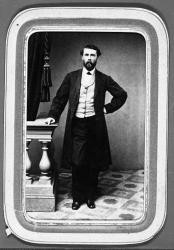
Building the Transcontinental Railroad
<p>At our core, we are railroad people. The railroads, for better or worse, shaped the cities in which we live and the spatial relationships between the rural and urban areas of the United States. Railroad language creeps into our vocabulary. We are always getting derailed, or off-track, or, if angry, we are steamed or getting ready to blow our stacks! Our understanding of time and of time zones and our ability to trace the minute shifts of seconds and minutes is a product of being a railroad nation. And, until recently, as one of the largest employers in the United States, many people have a personal family connection to working on the railroads. Railroads started well before 1869, but it was not until that year that the nation was bound together by a transcontinental system. On May 10, 1869, the driving of a golden spike, signaled the ceremonial end to a process that had been going on for years. Two companies, one starting in Omaha and the other in Sacramento competed to lay track. Their reward for each mile was government money and lots of it. By the time that they met at Promontory Point, Utah, vast sums of money and untold human labor and sacrifice had been expended on this incredible human endeavor. A single track united the continent. What used to take months by wagon train, could now be measured in mere days. It changed everything, forever. </p>
Glenn Wiebe
13

10 Causes to the Civil War
<p>In this collection, students will examine to what extent each of these events caused the Civil War. After reviewing the informaiton, they will be responsible for ranking these events from mostly effected the Civil War (1) to barely effected the Civil War (10).</p>
Glenn Wiebe
10
The Four Freedoms
The "Four Freedoms" speech, as the 1941 State of the Union address came to be known, were goals outlined by President Franklin Delano Roosevelt on January 6, 1941 to Congress and the American people. He proposed four fundamental freedoms that people everywhere in the world should enjoy and described the "unprecedented" threat that Nazi domination of Europe presented to the security of the United States. This Learning Lab collection includes four Norman Rockwell paintings, alongside a portrait of Franklin Delano Roosevelt and a stamp with this iconic phrase. An audio excerpt of the speech is available via the National Archives and included here.
Glenn Wiebe
9
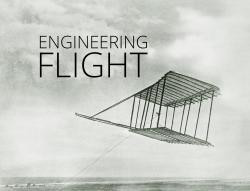
Engineering Flight
This collection is designed to teach students engineering skills using methods similar to those that made the Wright brothers pioneers of aviation.<br />
<br />
The first segment is a brief introduction to the forces of flight dynamics. The second segment is an online interactive, "Engineering the Wright Way", where students will develop engineering skills to design and test all the different components of an airplane based on the the Wrights' methodology. Students can write down a save code generated in the interactive to store their progress and return to finish the activity later. The final segment is an online interactive to test fly the original Wright Flyer in conditions similar to that cold December morning when the Wrights first achieved flight, using direct 3D scans of the original Wright Flyer made by the Smithsonian.<br />
<br />
For a full, downloadable lesson plan, visit: <br />
<a href="https://airandspace.si.edu/files/pdf/lesson-plans/wright-way-lesson.pdf">https://airandspace.si.edu/files/pdf/lesson-plans/wright-way-lesson.pdf</a><br />
<br />
The "Engineering the Wright Way" lesson plan and activity were created by the National Air and Space Museum, courtesy of the Alcoa Foundation.<br />
The Wright Brothers Flyer activity was created by the Smithsonian Center for Learning and Digital Access.
Glenn Wiebe
7