
Stephen Binns's collections
Platonic Relationships
<p class="MsoNormal">The dialogues of Plato are little dramas of ideas, starring
his late teacher Socrates, who left no writings of his own. Often we find
Socrates and his students grappling with definitions. The long dialogue <em>The Republic,</em> for example, centers on the
question <em>What is justice? </em>The
conversation sometimes begins with the relationships of various ordinary things
that can be called by the same word, such as <em>table </em>or <em>bed. </em>The
definition comes down to the “form" in which a thing “participates."</p>
<p>Your class might enjoy a brief introduction to what is called Plato's <em>theory of forms </em>or <em>theory of ideas.</em> Along the way you can match wits, not with the philosopher, but with the search engine of this website. A second part of this mini-symposium (minus the wine) looks at Plato the geometry teacher. To begin, <a href="https://learninglab.si.edu/collections/platonic-relationships-2/ukvkndxlrnavuwrj#r">click here</a>.<span></span><span></span></p>
 Stephen Binns
6
Platonic Relationships
<p class="MsoNormal"><a href="https://www.learninglab.si.edu/collections/platonic-relationships/ypf4FN07VAGm8oeb#r/141208">Click
here</a></p>
Stephen Binns
1
Platonic Relationships II
<p class="MsoNormal">In Plato's dialogue <em>Meno, </em>Socrates
and his friend Meno discuss the question <em>What is virtue? </em>They name a
number of men known as virtuous, including the Athenian statesman Pericles, who
was held as the very paragon of virtue in the way George Washington was in the
early days of our own republic. In the case of Washington, this can be seen in
all of the Smithsonian objects below. Horatio Greenough's rather colossal
statue is not so much a classically idealized Washington as a classical
treatment of a figure considered already ideal in his virtue. In the print to the right,
Virtue herself (whoever she is) leaves flowers on Washington's tomb. The "apotheosis" print, to her right, might make us wonder if anyone is lying in that
tomb. Washington does not die like a mere mortal but ascends into the
heavens—by virtue, we suppose, of his <em>virtue.</em>
But to say that Pericles or George Washington is a virtuous man is not to
define virtue<em>, </em>is it? <a href="https://learninglab.si.edu/collections/platonic-relationships-ii/81DBK01AVvd5J5t9#r">Click</a><span></span>.</p>
Stephen Binns
3
Saints by the Look of Them: Anthony, James, Joseph
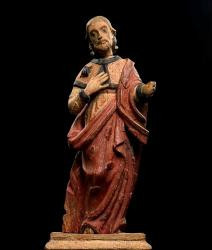
<p>Here are six representations of saints in the Smithsonian’s collections. Two are St. Anthony of Padua, two <br />are the apostle St. James the Greater, and two are St. Joseph, father of Jesus. In this game, you’ll try to unite<br />the two versions of each saint
in a folder marked ANTHONY, JAMES, or JOSEPH. If you need hints, you will<br />find information on the
saints' lives and the conventions of their depiction in art. To go to the game, <a href="https://learninglab.si.edu/collections/hint-1/C1d98acsrpK4ag1j#r/167799">click here</a>. <a href="https://learninglab.si.edu/collections/saints-by-the-look-of-them-anthony-james-joseph/fNdFU7m3rDGGHAeC#r"><br /></a></p>
<p>
↓ If you are an educator, click READ MORE. <a href="https://learninglab.si.edu/collections/saints-by-the-look-of-them-anthony-james-joseph/fNdFU7m3rDGGHAeC#r"><br /><br /></a></p>
Stephen Binns
6
Saints by the Look of Them: Barbara, Anne, Ursula
<p><span class="dotdotdot">Here are six representations of saints in the Smithsonian’s collections. Two are St. Barbara, two <br />are St. Anne, and two are St. Ursula. In this game, you’ll try to unite the two versions of each saint <br />in a folder marked BARBARA, ANNE, or URSULA. If you need hints, you will find information on <br />the saints' lives and the conventions of their depiction in art. </span><span class="dotdotdot"></span><span class="dotdotdot">To go to the game, <a href="https://learninglab.si.edu/collections/hint-1/mqpruWzttgycePDP#r/165187">click here</a>.</span><span class="dotdotdot"> </span><span class="dotdotdot"> </span><span class="dotdotdot"></span><span class="dotdotdot"><br /></span><br />↓<span class="dotdotdot"> If </span><span class="dotdotdot">you are an educator, click READ MORE.<br /></span><span class="dotdotdot"></span><span class="dotdotdot"></span><br /></p>
Stephen Binns
6
Saints by the Look of Them: Catherine, Martha, Joan
<p>Here are six representations of saints in the Smithsonian’s collections. In two are Catherine of Alexandria, <br />in two
are the New Testament figure Martha, and in two are Joan of Arc. In this game, you’ll try to unite the <br />two versions of each saint
in a folder marked CATHERINE, MARTHA, or JOAN. If you need hints, you will find <br />information on the
saints' lives and the conventions of their depiction in art. To go to the game, <span class="dotdotdot"></span><a href="http://learninglab.si.edu/collections/hint-1/L8rLyxwfvCGEhdqH#r/165983">click here</a>.</p>
<p>
↓ If you are an educator, click READ MORE.</p>
<p><span class="dotdotdot"><br /></span></p>
Stephen Binns
6
Saints by the Look of Them: Cecilia, Elizabeth, Mary
<p>Here are six representations of saints in the Smithsonian’s collections. Two are St. Cecilia, two
<br /> are St. Elizabeth of Hungary, and two are the Virgin Mary. In this game, you’ll try to unite the two<br /> versions of each saint
in a folder marked CECILIA, ELIZABETH, or MARY. If you need hints, you <br />will find information on the conventions of their depiction in art. To go to the game, <a href="https://learninglab.si.edu/collections/hint-1/P6e4NmWohVidpkPr#r/171082">click here</a>.</p>
<p>
↓ If you are an educator, click READ MORE.</p>
<p><br /></p>
Stephen Binns
6
Saints by the Look of Them: Christopher, George, Roch
<p>Here are six representations of saints in the Smithsonian’s collections. Two are St. Christopher, two <br />are St. George, and two are St. Roch. In this game, you’ll try to unite the two versions of each saint <br />in a folder marked CHRISTOPHER, GEORGE, or ROCH. If you need hints, you will find information <br />on the
saints' lives and the conventions of their depiction in art. To go to the game, <span class="editable-container"><a href="http://learninglab.si.edu/collections/hint-1/dCAFyz6i0iqGrgAY#r/168054">click here</a>.</span></p>
<p>
↓ If you are an educator, click READ MORE.<span class="editable-container"><a href="https://learninglab.si.edu/collections/hint-1/dCAFyz6i0iqGrgAY#r/168054"> <br /><br /></a></span></p>
Stephen Binns
6
Saints by the Look of Them: Francis, Dominic, Eustace
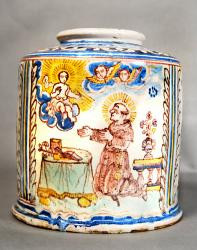
<p><span class="dotdotdot is-truncated"><span class="dotdotdot">Here are six representations of saints in the Smithsonian’s collections. Two are St. Francis of Assisi, <br /> two are St. Dominic, and two are St. Eustace. In this game, you’ll try to unite the two versions of each <br /> saint in a folder marked FRANCIS, DOMINIC, or EUSTACE. If you need hints, you will find information <br />on the saints' lives and the conventions of their depiction in art. </span><span class="dotdotdot"></span><span class="dotdotdot"></span></span>To go to the game, <a href="http://learninglab.si.edu/collections/hint-1/4mD4dz5XyMDiEb3w#r/172800">click here</a>.</p>
<p></p>
<p><span class="dotdotdot is-truncated"> ↓<span class="dotdotdot"> If </span><span class="dotdotdot">you are an educator, click READ MORE.<br /></span></span></p>
<p><span class="dotdotdot is-truncated"><span class="dotdotdot"><br /></span></span></p>
<p><span class="dotdotdot is-truncated"><span class="dotdotdot"></span></span><a href="https://learninglab.si.edu/collections/hint-1/4mD4dz5XyMDiEb3w/edit#er"><br /></a><br /></p>
<p></p>
Stephen Binns
6
Saints by the Look of Them: Gabriel, Michael, Raphael (Catholic Education)
<p>Here are six representations in the Smithsonian's collections of the Big Three of angels. Two <br />are St. Gabriel, two are St. Michael, two are St. Raphael. In this game, you’ll try to unite the two<br /> versions of each angel in a folder marked GABRIEL, MICHAEL, or RAPHAEL. If you need hints, you <br />will find information on the conventions of their depiction in art. To go to the game, <a href="https://learninglab.si.edu/collections/hint-1/4b5tx81pGnBwKmNo#r/164315">click here</a>.</p>
<p>
↓ If you are an educator, click READ MORE.</p><p><br /></p>
Stephen Binns
6
Saints by the Look of Them: Jerome, John, John
<p></p>
<p>Here are six representations of saints in the Smithsonian’s collections. Two are Jerome, two are John<br />the Evangelist, two are John the Baptist. In this game, you’ll try to unite the two versions of each saint<br />in a folder marked JEROME, JOHN EVANGELIST, or JOHN BAPTIST. If you need hints, you will find<br />information on the saints' lives and the conventions of their depiction in art. To go to the game, <a href="https://learninglab.si.edu/collections/hint-1/X3e9cnzYtd1mJU0E#r/186361">click here</a>. <br /></p>
<p></p>
<p>↓ If you are an educator, click READ MORE.</p>
<p><a href="https://learninglab.si.edu/collections/picture-matching-game-saints-by-the-look-of-them/dHMzx1BDAPNwEvbJ#r/160099"><br /></a><br /></p>
<p></p>
<p></p>
Stephen Binns
6
Saints by the Look of Them: Matthew, Mark, Luke
<p>Here are six representations of saints in the Smithsonian’s collections. Two are St. Matthew, <br />two
are St. Mark, and two are St. Luke. In this game, you’ll try to unite the two versions of each <br />saint
in a folder marked MATTHEW, MARK, or LUKE. If you need hints, you will find information <br />on the
saints' lives and the conventions of their depiction in art. To go to the game, <a href="https://learninglab.si.edu/collections/hint-1/unXVbPEmYXDfktBr#r/160628">click here</a>.</p>
<p>
↓ If you are an educator, click READ MORE.</p>
<p><br /></p>
Stephen Binns
6
Saints by the Look of Them: Nicholas, Patrick, Stephen
<p><span class="dotdotdot"></span></p>
<p>Here are six representations of saints in the Smithsonian’s collections. Two are St. Nicholas, two<br /> are St. Patrick, two are St. Stephen. In this game, you’ll try to unite the two versions of each saint <br /> in a folder marked NICHOLAS, PATRICK, or STEPHEN. If you need hints, you will find information <br />on the saints' lives and the conventions of their depiction in art. To go to the game, <a href="http://learninglab.si.edu/collections/hint-1/yugslvwbhvjgr0dn#r/163387">click here</a>.</p>
<p> ↓ If you are an educator, click READ MORE.</p>
<p><br /></p>
<p><br /></p>
Stephen Binns
6
Smithsonian Rebus: Introduction
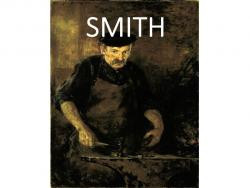
<p><br /><br /> SMITH SONY YAWN. <a href="https://learninglab.si.edu/collections/smithsonian-rebus-introduction/2N678fqTAPPBM4nL?newCollection">Click.</a><br /></p>
Stephen Binns
3

Smithsonian Rebus: What's in a Name?
<p><br /><br />WHEEL YAM SHAKE SPEAR. The reigning champ. Still <em>the </em>biggest deal in English literature. In this set <br />of Smithsonian Rebus puzzles, we’ll look at a couple of lines in one of Shakespeare’s most popular plays. <br /><br />For an introduction to Smithsonian Rebuses, <a href="https://learninglab.si.edu/collections/smithsonian-rebus-introduction/7KGygXNDNUkpWvac#r">click here</a>. To go to the puzzle, <a href="https://learninglab.si.edu/collections/smithsonian-rebus-whats-in-a-name/DgYuT8VnCErqHi7q#r">click here</a>.<br /></p>
Stephen Binns
4
Topology: An Introduction
<p><em>Geometry, geology,</em> and <em>geography </em>are words that are easily confused. More confusing still, those fields <br />of study share a word that means two very different things, depending on the field. The word is <em>topology.</em> <br />To a geographer or geologist, topology has to do with the planet's surface and its changeable forms. To a <br />geometrician, topology has to do with the constant properties of forms—properties that <em>never change</em>. <br /><br />To continue, <a href="https://learninglab.si.edu/collections/invariance/Cz9oCxCcKc2C8H4T#r">click here</a>. If you are an educator, click READ MORE below.</p>
<p><br /></p>
Stephen Binns
3

You Might Remember This: A Smithsonian Movie Quiz
<p class="MsoNormal">This Smithsonian quiz brings the actual world to bear on the
worlds created by filmmakers in the last century or so. The rules are simple.
The player looks at a set of museum objects from anywhere around the
Smithsonian and tries to answer a question: <em>These
Smithsonian things remind me of a movie. Can you guess which one? </em></p>
<p>Each
question is set up much like what is below. A multiple choice is in the box with the question mark. The answer is in the last box. The movie
used for the example here is <em>Casablanca. </em>You
know, the one about the fundamental things and their many applications. To take the quiz, <a href="https://learninglab.si.edu/profile/188">click
here</a>.</p>
<p><br /></p>
Stephen Binns
5

Zoo Animal Identification: How to Tell a Tiger
<br /><p>At the time of this writing, early 2018, the Smithsonian’s <br />National Zoo is home to two adult Sumatran tigers. <a href="https://learninglab.si.edu/collections/how-to-tell-a-tiger/mRFHojJfKwRXWXrk#r">Click</a>.</p>
Stephen Binns
2
Zoo Animal Identification: Seen One Zebra?
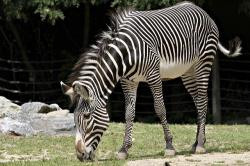
<p> If you’ve seen one zebra, you’ve seen them all, right? That, it seems, is what nature<br /> wants us to think. Zebras live in herds. What a predator sees in the herd is one mass <br /> of stripes, like a conference of referees on a football field. It may be hard for that <br /> predator—a lion, leopard, cheetah, or hyena—to focus on one individual. <br /></p>
<p> To continue, <a href="https://learninglab.si.edu/collections/seen-one-zebra/k2BgdyAW8qjE4sbJ#r">click here</a>.</p>
Stephen Binns
3